
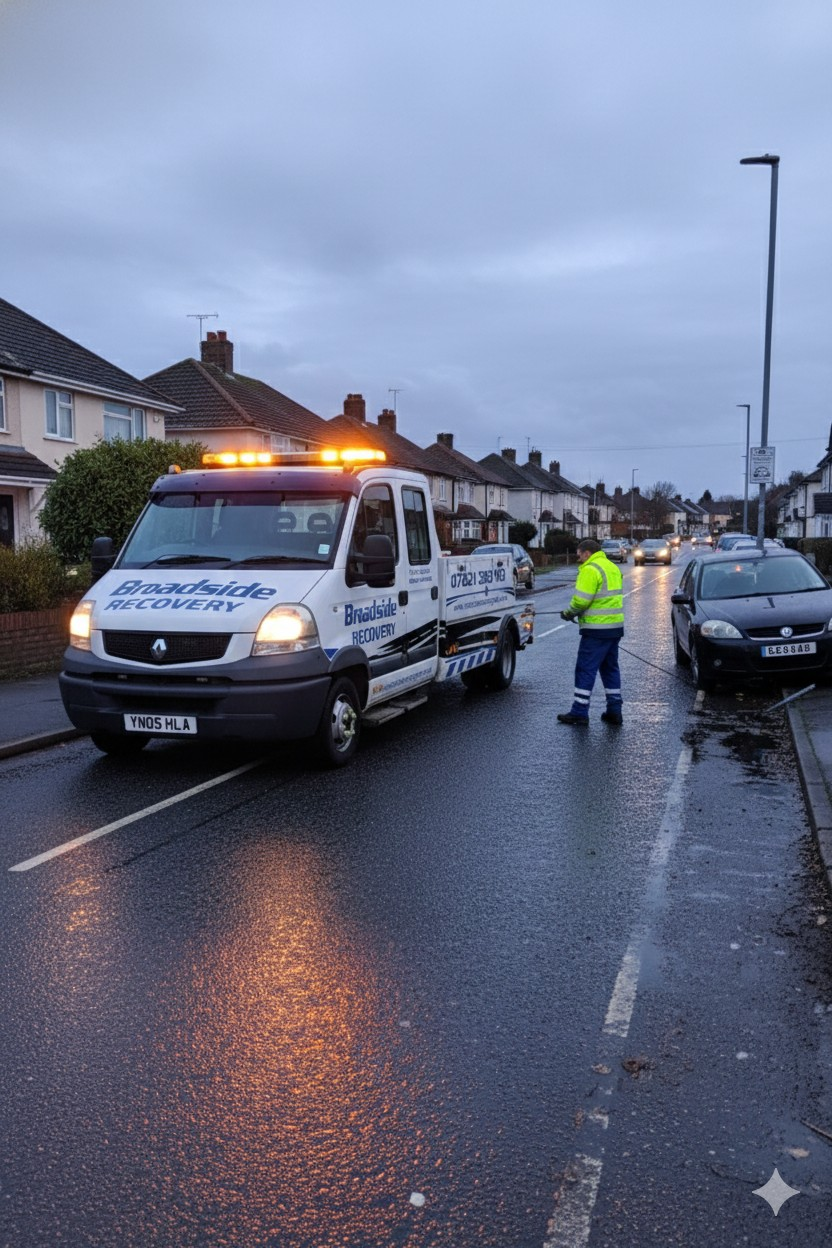
Being involved in a collision is stressful, and not knowing what happens next often makes it worse. Once a vehicle is damaged and cannot be driven safely, it needs to be recovered from the scene, and that process usually follows a fairly consistent pattern whether it happens on the A30 at rush hour or down a narrow lane near the coast.
This guide sets out, in order, what generally happens from the collision itself through to the vehicle reaching a garage or storage yard. It is a general description of common UK practice, not a promise of exactly how every job unfolds — the police, your insurer and the recovery operator on scene will always have the final say on the day.
Immediate scene safety comes first
Before anything else happens, the priority at any collision scene is making sure nobody is injured and that the scene itself does not cause a second incident. On a fast road like the A30 or A38 this often matters more than the damaged vehicle itself.
If it is safe to do so, vehicles are usually moved onto the verge or a layby rather than left blocking a live lane. If someone is injured, or the road is fully blocked, the police and emergency services take priority over recovery.
- Hazard warning lights and a warning triangle where it is safe to place one
- Getting occupants behind a barrier or well away from moving traffic
- Not attempting to push or drag a vehicle yourself on a fast road
- Calling 999 for injuries, a blocked carriageway, or a fuel or fire risk
- Waiting for the police or Highways to confirm it is safe before recovery starts
Police and Highways involvement
Not every collision needs police attendance, but on a motorway, dual carriageway or where the road is blocked, the police or National Highways traffic officers will usually attend and manage the scene. They decide when it is safe for a recovery vehicle to approach and often control which lanes are closed.
In more serious incidents, the police can instruct a specific recovery contractor rather than the vehicle owner's own choice, particularly where the vehicle needs to be moved quickly to reopen the road. In most straightforward cases on minor roads, you are free to call whoever you like, including your own breakdown cover or an independent firm such as Broadside Recovery.
Assessing the vehicle before uplift
Once it is safe to approach, the recovery operator will look at how the vehicle is sitting, whether it rolls, steers and brakes, and whether there is fluid leaking, a fuel or battery risk, or airbags deployed. This assessment decides the recovery method.
A vehicle that has simply come to a stop against a verge might be driven or winched straight onto a flatbed. A vehicle that has rolled, is on its side, or is wedged against a hedge or wall usually needs specialist rigging and more time on scene.
- Checking for fuel, oil or coolant leaks before loading
- Confirming the wheels turn and the vehicle can be winched safely
- Checking for airbag deployment or exposed sharp damage
- Photographing the position and damage before it is moved
- Deciding whether skates, dollies or a winch are needed
Uplift and loading
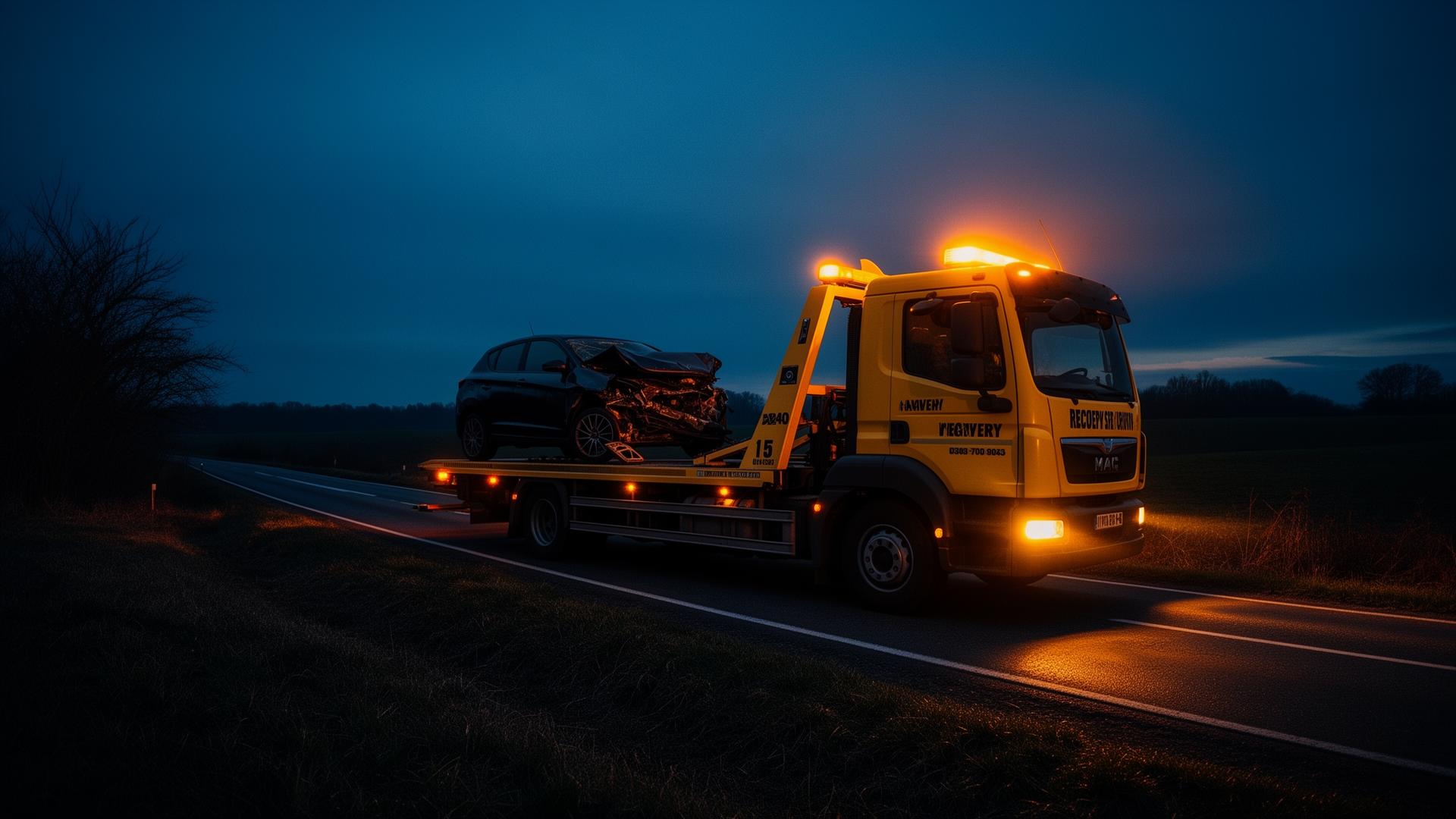
Most modern accident recovery in Cornwall is done using a flatbed, which keeps all four wheels off the ground during transport and avoids putting strain on a damaged drivetrain or suspension. The vehicle is usually winched onto the bed rather than driven, since it may not be steerable or braking correctly even if it can roll.
This part of the job can take longer than people expect, particularly on a narrow lane, a verge with a steep camber, or where the vehicle is partly in a ditch or against a hedge bank. Rushing this stage risks further damage or injury, so a careful operator will take the time needed to load safely.
Storage and onward movement
Once loaded, the vehicle is usually taken to one of three places: your home address, a bodyshop or garage of your choice, or a secure storage yard if a decision on repair or write-off has not yet been made. Which of these applies often depends on what your insurer has agreed and whether the vehicle is driveable or a total loss.
In Cornwall the distance to a suitable bodyshop can be significant, particularly from the far west or north coast, so it is worth asking the recovery operator or your insurer where the vehicle is actually going before it leaves the scene, rather than finding out afterwards.
- Home address, if you simply want the vehicle off the road for now
- A bodyshop or garage, if repair has already been agreed
- A secure storage yard, pending an insurance decision
- Onward transport to a specialist assessor for higher-value or unusual vehicles
What you should keep track of
Throughout this process it helps to keep your own simple record: who attended, any reference or job number given, where the vehicle has gone, and photographs taken at the scene. This makes the insurance claim that follows considerably smoother.
It is also worth checking with your insurer whether recovery and storage costs are covered under your policy, since this varies and is usually explained in the policy documents rather than something a recovery operator can confirm on your behalf.
- Recovery operator name and job reference
- Time and location the vehicle was picked up
- Where it has been taken and any storage charges accruing
- Your own photographs of the scene and damage
Need this sorted today?
If you need a vehicle recovered from a collision anywhere in Cornwall, call Broadside Recovery on 07874 130193 for prompt attendance.
Frequently asked questions
Do I have to use the recovery firm the police called?
On a motorway or blocked carriageway the police or Highways may instruct a specific contractor to clear the scene quickly, and in that situation you usually have little choice. On a minor road where nothing is blocked, you can usually call your own breakdown cover or an independent recovery firm instead.
How long does accident recovery usually take?
It depends heavily on location and how the vehicle is positioned. A straightforward roadside recovery can take well under an hour, while a vehicle down a bank, in a ditch, or requiring careful winching on a single-track lane can take considerably longer.
Will my car go straight to a garage?
Not always. It often goes to your home address or a secure storage yard first, especially if your insurer needs to assess the damage before agreeing repairs. Ask the recovery operator or your insurer to confirm the destination if you are not sure.
Who pays for the recovery after an accident?
This is usually covered by your insurance policy, either directly or as part of a claim, but the details vary by policy and by who is at fault. It is worth checking your policy documents or asking your insurer before assuming any particular cost is covered.
What if my vehicle is blocking the road?
If a vehicle is blocking a live carriageway, particularly a fast road, the police or Highways will usually prioritise getting it moved safely, sometimes using a contractor of their choosing to clear the lane as quickly as possible.
Can I collect personal belongings from the vehicle at the scene?
In most cases yes, provided it is safe to do so and the police or recovery operator are not still working around the vehicle. If the scene is dangerous or the vehicle is unstable, it is usually safer to wait until it reaches its destination.
Services covered in this guide
Related guides
What to Do at the Scene of an Accident
The practical steps to take in the minutes after a collision, from staying safe to exchanging details and knowing when to call the police.
ReadVehicle Recovery After a Non-Fault Accident
What non-fault claims usually involve, why some firms push you toward credit hire, and how to keep control of recovery, storage and repair choices.
ReadUsing Dashcam Footage After an Accident
Practical steps for saving dashcam footage after a collision so it is not overwritten, and what to expect when sharing it with insurers or police.
Read