
Being in an accident that was clearly not your fault should, in theory, be more straightforward. In practice it can bring its own complications, particularly around who arranges recovery, where the vehicle is stored, and who you use for repairs. Some of the pressure people feel in this situation comes from claims management companies rather than from insurers or the law itself.
This guide explains, in general terms, how non-fault recovery and repair usually works in the UK, and some points worth being aware of if you are contacted by a third party offering to handle everything for you. It is general information rather than legal or financial advice, and the right approach depends on your specific policy and circumstances.
What 'non-fault' actually means
Being non-fault means the other driver, or their insurer, is considered responsible for the collision, usually after liability is agreed between the insurers involved. This can sometimes take a little time to formally confirm, even if it seems obvious at the scene.
In the meantime, you are generally entitled to have your vehicle recovered and repaired without it costing you personally, though the way this is funded and arranged can vary, and it is not always as simple as it first appears.
Who arranges recovery after a non-fault accident
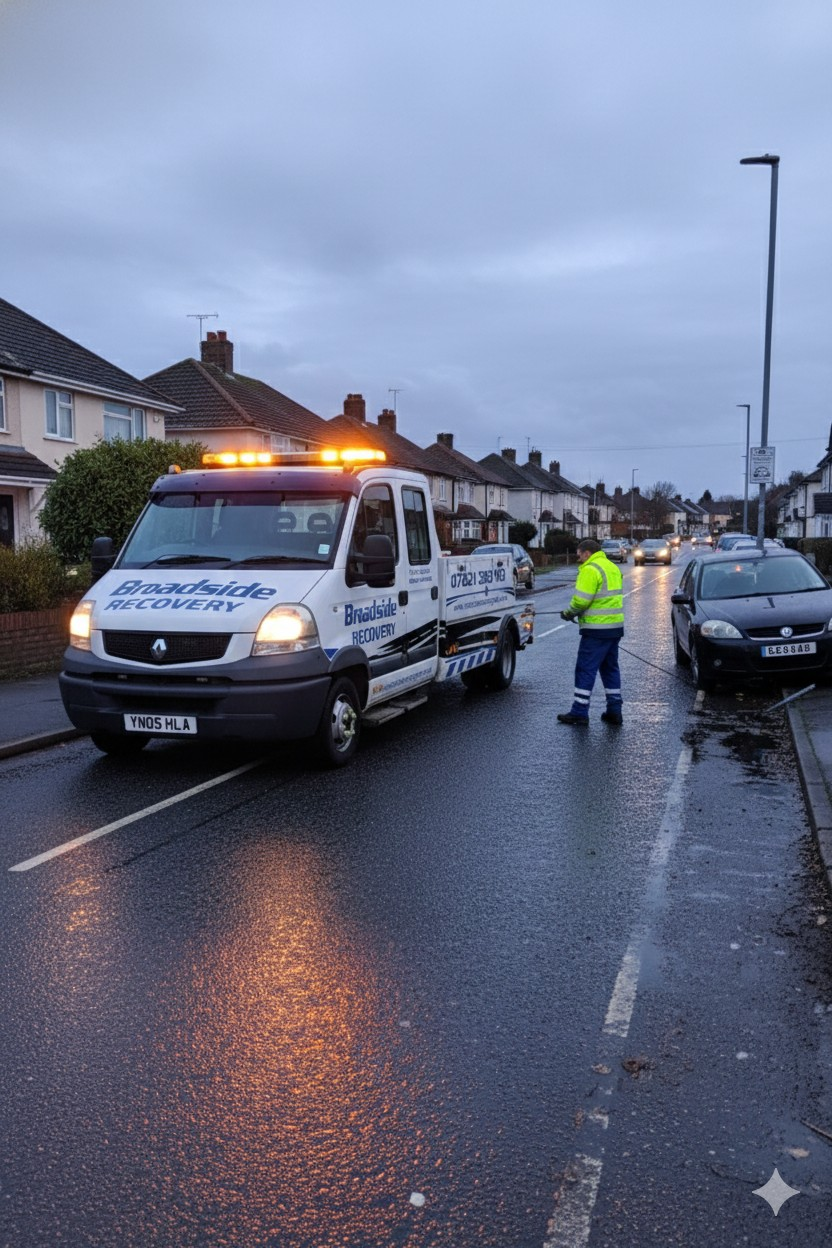
In most cases you, your insurer, or your breakdown provider can arrange recovery from the scene in the usual way, using any recovery firm rather than one dictated by the other party. It is worth telling your own insurer promptly that the accident was not your fault, since this can affect how the claim is handled from the start.
Some people are approached at the scene, or shortly afterwards, by a third-party accident management or claims company offering to arrange everything, including recovery, a replacement vehicle and repairs. You are not usually obliged to use them, and it is worth understanding what you are agreeing to before signing anything.
- You can usually choose your own recovery firm rather than one suggested at the scene
- Notify your own insurer of the accident promptly, even if it is not your fault
- Be cautious about signing paperwork from a company you did not contact yourself
- Ask who is actually paying for recovery and storage before agreeing to anything
Credit hire and why it needs care
Credit hire is an arrangement where a replacement vehicle is provided on credit while your claim is resolved, with the cost later recovered from the at-fault driver's insurer. It can be useful if you need a vehicle urgently and your own insurer cannot provide one quickly, but the costs involved can be high and are sometimes disputed by the at-fault insurer later.
If a claims management company arranges credit hire on your behalf, it is worth understanding that you may remain liable for the hire cost if it cannot later be fully recovered from the other side, depending on the terms of the agreement you sign.
- Ask exactly who is liable for the hire cost if it isn't fully recovered later
- Compare against a courtesy car offered directly by your own insurer
- Read any credit hire agreement carefully before signing
- Check whether you actually need a replacement vehicle before agreeing to one
Choosing your own repairer
In most non-fault claims you are entitled to choose your own repairer rather than being limited to one suggested by a claims management company or the other insurer, although your own insurer may have an approved network that offers guarantees on the work. In Cornwall, distance to a suitable bodyshop can be a genuine factor, since specialist repairers are not evenly spread across the county.
It is worth asking directly whether you are being offered a choice or simply told where the vehicle is going, since some accident management arrangements steer vehicles toward a particular repairer as part of their business model rather than for your benefit.
Storage charges and delays
If a vehicle is taken into storage while liability or repair decisions are made, storage charges usually start accruing, and these need to be tracked carefully since they can become a point of dispute between insurers later. Ask early on where the vehicle is being stored, who authorised it, and what the daily charge is.
Long delays are more likely if liability is disputed between insurers, or if a vehicle has gone to a storage yard some distance from where the claim is being handled, which can be a particular issue given Cornwall's geography and distance from some head-office claims teams.
- Confirm who authorised the vehicle going into storage
- Ask for the daily storage rate in writing if possible
- Chase for an update if liability seems to be taking a long time to resolve
- Keep your own insurer informed even in a clear non-fault case
Avoiding pressure at the scene or afterwards
It is common for third parties, sometimes linked to the recovery firm itself, to approach people at the scene of a non-fault accident with offers to handle the whole claim. There is nothing automatically wrong with this, but it is worth taking a moment before agreeing, rather than signing something under pressure while still shaken from the collision.
A reasonable approach is to get your own vehicle recovered safely first, then deal with the wider claims process once you have had a chance to speak to your own insurer and, if helpful, check your policy documents at home.
Need this sorted today?
For prompt, independent recovery after a non-fault accident anywhere in Cornwall, call Broadside Recovery on 07874 130193.
Frequently asked questions
Do I have to pay anything if the accident wasn't my fault?
In most non-fault claims you should not be left out of pocket for recovery, storage or repair costs, since these are usually recovered from the at-fault driver's insurer, though the process can take time to sort out.
Can someone else choose the recovery firm for me?
Not usually without your agreement, except where the police or Highways instruct a specific contractor to clear a blocked road. Otherwise you are generally free to choose your own recovery firm.
Should I sign paperwork offered at the scene by a claims company?
It is usually sensible to take your time rather than sign at the scene, since some claims management arrangements can commit you to costs or a particular repairer that may not suit you. Reading the terms properly, ideally away from the immediate stress of the accident, is a reasonable approach.
Will my no-claims discount be affected in a non-fault claim?
In most cases a genuinely non-fault claim should not affect your no-claims discount once liability is confirmed, but this depends on your insurer's specific rules, so it is worth checking your policy or asking directly.
Can I get my car repaired somewhere other than my insurer's network?
Usually yes, you can generally choose your own repairer in a non-fault claim, though your insurer's approved network may offer guarantees that an independent garage does not, which is worth weighing up.
What if the other insurer disputes fault?
If liability is disputed, resolving recovery, storage and repair costs can take longer, and it is worth keeping your own insurer updated throughout so your interests are represented while the dispute is worked through.
Services covered in this guide
Related guides
The Accident Recovery Process Explained
A plain walkthrough of what happens from the moment a collision is reported to the vehicle arriving at a garage or storage yard.
ReadInsurance Claims After a Breakdown
A plain explanation of what standard car insurance typically covers, and does not cover, when a vehicle breaks down mechanically rather than being in a collision.
ReadWhat to Do at the Scene of an Accident
The practical steps to take in the minutes after a collision, from staying safe to exchanging details and knowing when to call the police.
Read