
Being locked out of your own car is one of those situations that feels solvable right up until you realise it is not, and every version of it needs a slightly different next step. Keys locked inside the cabin, a lost set entirely, a dead key fob, or keys accidentally locked in the boot are all technically "locked out", but the fix for each is different.
This guide walks through the common ways a lockout happens, sets realistic expectations for what a recovery operator can and cannot do, and explains when the right call is a locksmith, a dealer, or vehicle transport rather than trying to force entry yourself.
It is worth being clear early on: recovery operators move vehicles, they do not pick locks. Knowing that distinction upfront saves time and frustration when you call.
The different ways you can end up locked out
Not every lockout is the same problem, even though it feels identical standing outside the car. Working out which category applies to you determines what happens next.
Take a moment to identify exactly what has happened before calling anyone, because it changes who you actually need.
- Keys visible inside the car, doors locked — the most common and often the quickest to resolve
- Keys lost entirely — not in the car, not in a pocket, genuinely missing
- Key fob battery dead — the fob won't unlock the car but the physical key may still be inside it
- Keys locked in the boot — separate from the cabin, and on some cars the boot cannot be accessed from inside
- Central locking or electronic fault — the car won't unlock even with a seemingly working key
What a recovery operator can actually do
This is the part that surprises a lot of people: a recovery company is not a locksmith. Recovery drivers are trained and equipped to move vehicles safely, not to open locked doors without a key, and most will not attempt to force entry because of the risk of damaging the vehicle.
What a recovery service can genuinely help with is getting the vehicle, and you, somewhere useful — whether that is home to collect a spare key, to a dealership, or to an auto locksmith who is equipped to make emergency entry or cut a new key on the spot.
- Cannot pick or force a lock without risking damage to the vehicle
- Cannot bypass immobilisers or start a car without a working key
- Can transport the vehicle to a locksmith, dealer or your home
- Can provide a safe waiting point if the vehicle needs to stay where it is temporarily
- Can advise on which type of specialist is needed based on what has actually happened
Keys locked inside vs keys lost entirely
If the keys are visible inside the car, an auto locksmith can usually gain non-destructive entry fairly quickly using specialist tools, without needing a new key cut at all. This is normally the fastest and cheapest route back into the car.
If the keys are genuinely lost, entry alone does not solve the problem — you also need a replacement key, which usually means a locksmith with the equipment to cut and programme a new key on site, or a trip to a main dealer if the vehicle needs manufacturer-specific programming.
Dead key fobs and keys locked in the boot
A dead fob battery is often mistaken for a full lockout, but many cars still have a mechanical key blade hidden inside the fob that can open the driver's door manually, even though the electronics are not working. Once inside, some cars will still start using the mechanical backup or by holding the fob against a specific point near the ignition.
Keys locked in the boot are trickier, because on many cars the boot is a separate locked space from the cabin and cannot be reached from inside even if you could get into the car itself. This situation usually needs either a spare key or a locksmith who can access the boot lock mechanism directly.
- Check the fob itself for a small release catch hiding a mechanical key blade
- A dead fob does not always mean a dead car — some models start with the fob held near the start button
- Boot lockouts often cannot be solved from inside the cabin even once the doors are open
- Keep a spare key somewhere accessible at home specifically for this scenario
When the vehicle needs to be moved
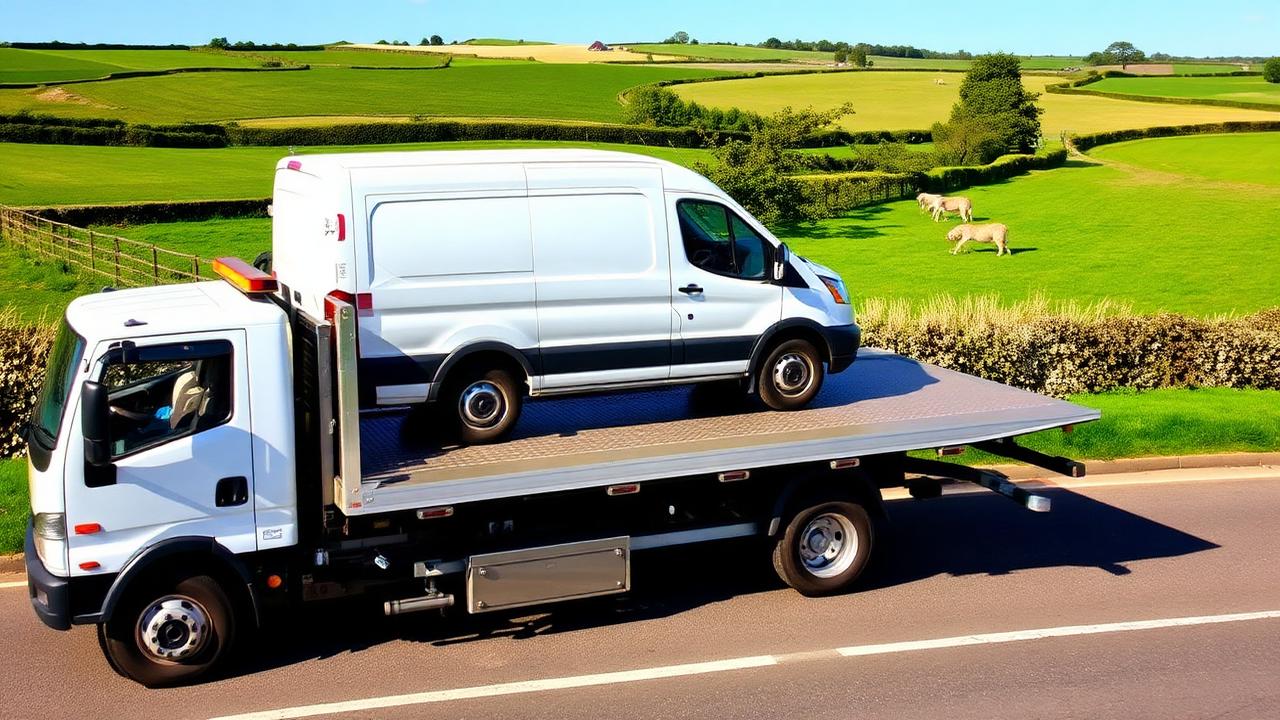
Sometimes the car is fine but stuck in a bad location — a supermarket car park after closing, a narrow lane, or somewhere it cannot legally or safely stay overnight. In these cases, even before the lock issue is solved, getting the vehicle moved to somewhere safe and accessible is the priority.
This is where recovery genuinely fits in: transporting the vehicle to your home, to a locksmith's premises, or to a dealership where the key and lock issue can then be resolved properly, rather than leaving the car where it broke down.
Practical steps to take right now
If you find yourself locked out, a sensible order of steps is usually:
- Check every door and the boot — sometimes one panel is unlocked even if others are not
- Check for a spare key at home that someone could bring to you
- Call an auto locksmith first if keys are visible inside the car — this is often the quickest fix
- Call a recovery service if the vehicle needs to be moved to a locksmith, dealer or home
- Avoid coat-hanger or DIY entry attempts on modern cars — they rarely work and can damage seals or electronics
Need this sorted today?
If your car needs moving because of a lockout, call us and we'll get it somewhere safe while you sort the keys.
Frequently asked questions
Can a recovery driver break into my car for me?
No. Recovery drivers are trained to move vehicles safely, not to force entry, and most will not attempt it because of the risk of damaging the car. An auto locksmith is the right specialist for gaining entry.
What's the difference between a locksmith and a recovery service for a lockout?
A locksmith gains entry to the vehicle and can cut or programme replacement keys. A recovery service moves the vehicle itself if it needs to go somewhere, such as home or to a locksmith or dealer.
My key fob is dead — does that mean I'm properly locked out?
Not necessarily. Many fobs contain a hidden mechanical key blade that can open the driver's door manually, and the car may still start using a backup method even with a flat fob battery. Check the fob for a release catch first.
I've locked my keys in the boot — can I get to them through the back seats?
On many vehicles, no — the boot is a separate locked compartment that cannot be reached from inside the cabin. This situation usually needs a locksmith who can access the boot lock directly, or a spare key.
Do I need to go to a main dealer if I've lost my keys completely?
Not always. Many auto locksmiths can cut and programme replacement keys on site for a wide range of makes and models, which is often quicker and less costly than a dealer visit, though some vehicles do require dealer-level programming.
What should I do if my car is locked in an unsafe location overnight?
Prioritise getting the vehicle moved somewhere safe and legal, such as home or a locksmith's premises, using a recovery service, rather than leaving it in place while you sort out the lock issue separately.
Services covered in this guide
Related guides
What Happens When You Call
The full call-out sequence from first ring to drop-off, including exactly what to do while you wait at the roadside.
ReadCar Will Not Start, What Is Actually Wrong
The noise the car makes when you turn the key narrows it down faster than anything else. Here is how to read it.
ReadAfter a Breakdown, and Who Pays
The recovery is the easy part. This is what happens to the vehicle afterwards, and who ends up settling the bill.
Read