
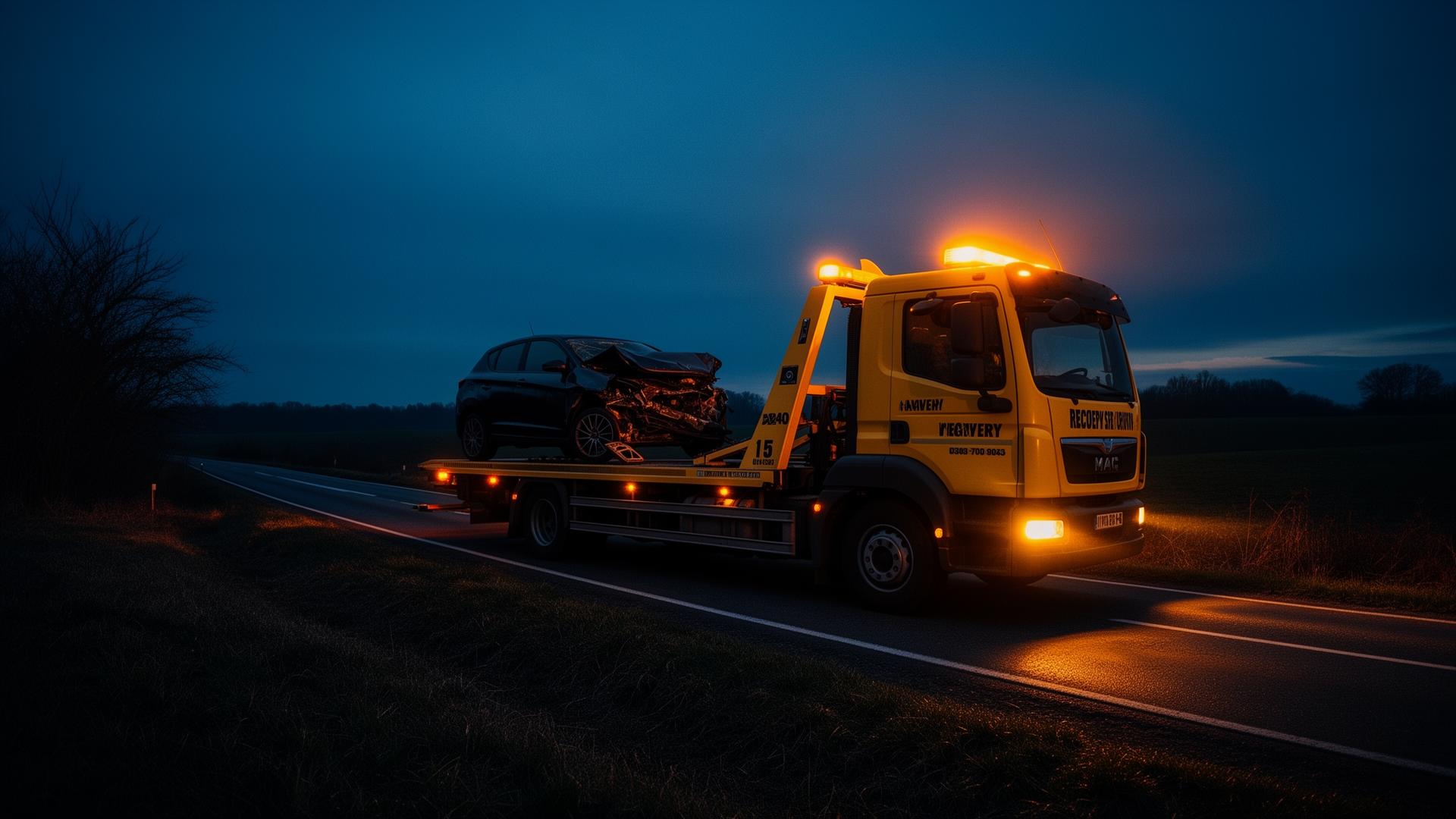
If you have never had to call recovery before, the uncertainty is the worst part. This walks through the whole sequence so you know what is coming.
It applies whether you have broken down on the A30, failed to start on your driveway, or need a non-runner moved between garages.
1. The call
We ask five things: where you are, what you are driving, what has happened, whether the vehicle rolls, and where it needs to go. That is enough to send the right truck with the right equipment first time.
The single most useful thing you can give us is a precise location. A what3words address, a postcode, a driver location sign on a dual carriageway, or a nearby junction number all beat a town name.
2. While you wait
If you are on a live road, your safety comes before the vehicle every time.
- Get the vehicle as far left as you safely can, hazards on
- On a dual carriageway or fast A-road, leave through the nearside doors and stand behind the barrier, up the bank, away from the vehicle
- On a single-track Cornish lane, do not stand on a blind bend — walk to where you can be seen from both directions
- Keep your phone on and unlocked for callbacks; the driver may ring as they approach
- Gather keys, locking wheel nut, V5 or purchase paperwork if the vehicle is being transported
3. On arrival
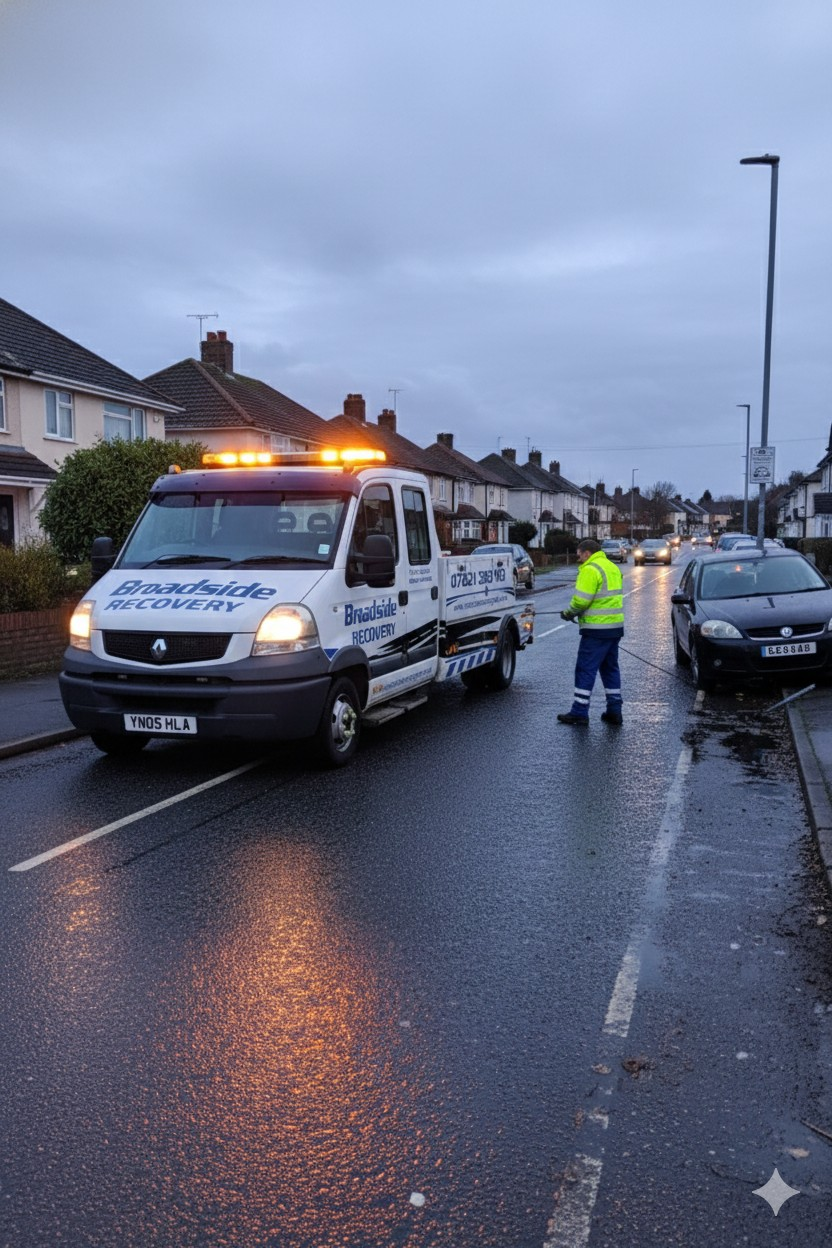
The driver assesses the ground, the vehicle and the traffic before touching anything. If the vehicle rolls it is winched or driven onto the bed; if not, skates, dollies or a winch pull are used to get it into position.
Straps go onto wheels or designated chassis points, the load is checked, and only then does the truck move. On a busy road this is deliberately unhurried — rushing a load is how vehicles get damaged.
4. Drop-off
We take the vehicle to wherever you have agreed: a garage, your home, a storage yard or a buyer's address. If a garage is closed, we can usually leave the vehicle in a position agreed with them and hand keys over as instructed.
You do not have to travel in the truck if you have another way home, but if you are stranded we will talk through the options with you rather than leave you at the roadside.
Need this sorted today?
Broken down right now? Call and we will start the process on this phone call.
Frequently asked questions
How quickly can you get to me?
It depends on where you are and what the truck is already doing. We give you a realistic time on the phone rather than an optimistic one, and if that changes on the way, we call you.
Can I ride in the truck with my vehicle?
In most cases yes, subject to seat availability and the number of passengers. Tell us how many people are with you when you call so we can plan it.
What if I do not have the keys?
Say so on the call. A keyless vehicle can still be recovered, but it usually needs skates or dollies because the steering may be locked, and that changes the equipment we bring.
Do I need to be with the vehicle?
Not always. For booked transport of a non-runner we can collect from an address with arrangements made in advance, provided access and keys are sorted and the release is authorised.
Services covered in this guide
Related guides
How Long Does Recovery Take?
There is no single number for a recovery job. The total is three separate waits added together, and you can influence two of them.
ReadBroken Down on the A30
The A30 is the county's spine and its fastest road. Here is the safe sequence if you stop on it.
ReadWhat Vehicle Recovery Costs in Cornwall
The six factors that actually move the price of a recovery job, and how to describe your situation so the quote you get is the price you pay.
ReadRecovery in Narrow Cornish Lanes
Cornwall's lanes are the county's defining recovery challenge. Here is how a truck actually gets to you.
Read