
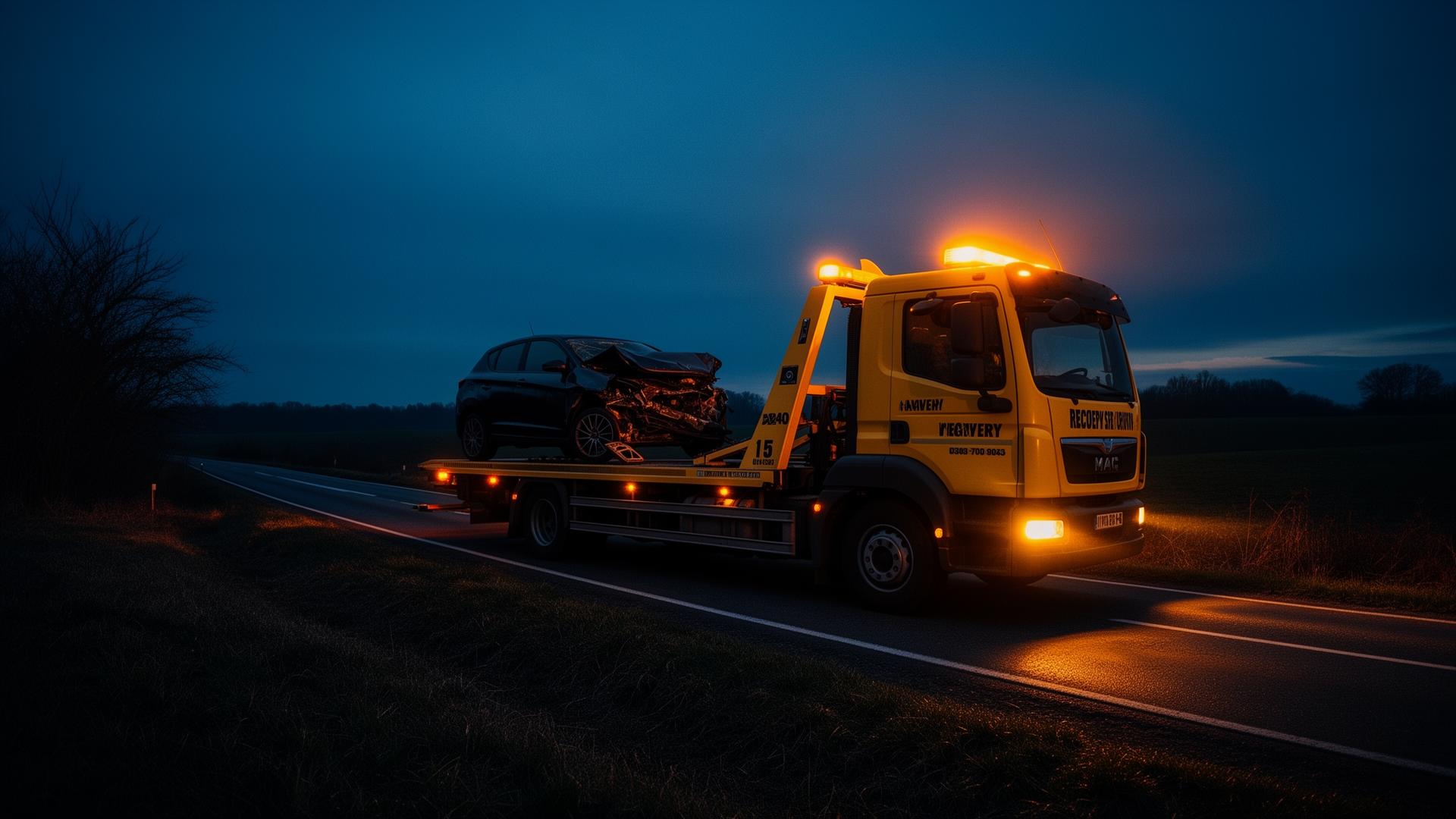
Cornwall sees a very high volume of motorhome and campervan traffic, and those vehicles break down in places ordinary cars do not: campsite fields, coastal car parks, and lanes they should probably not have turned into.
Recovery is entirely possible, but it depends on three numbers and one question about access. Get them right on the call and the correct truck turns up first time.
The three numbers we need
- Gross weight — the MAM on your V5 or plate, not the empty weight. This decides whether the job fits our 3.5 ton or 7.5 ton capability.
- Length — long-wheelbase coachbuilts and A-classes need bed length and turning room.
- Height — relevant for the route, not the load; low bridges and tree-lined lanes both matter in Cornwall.
Access is the usual problem
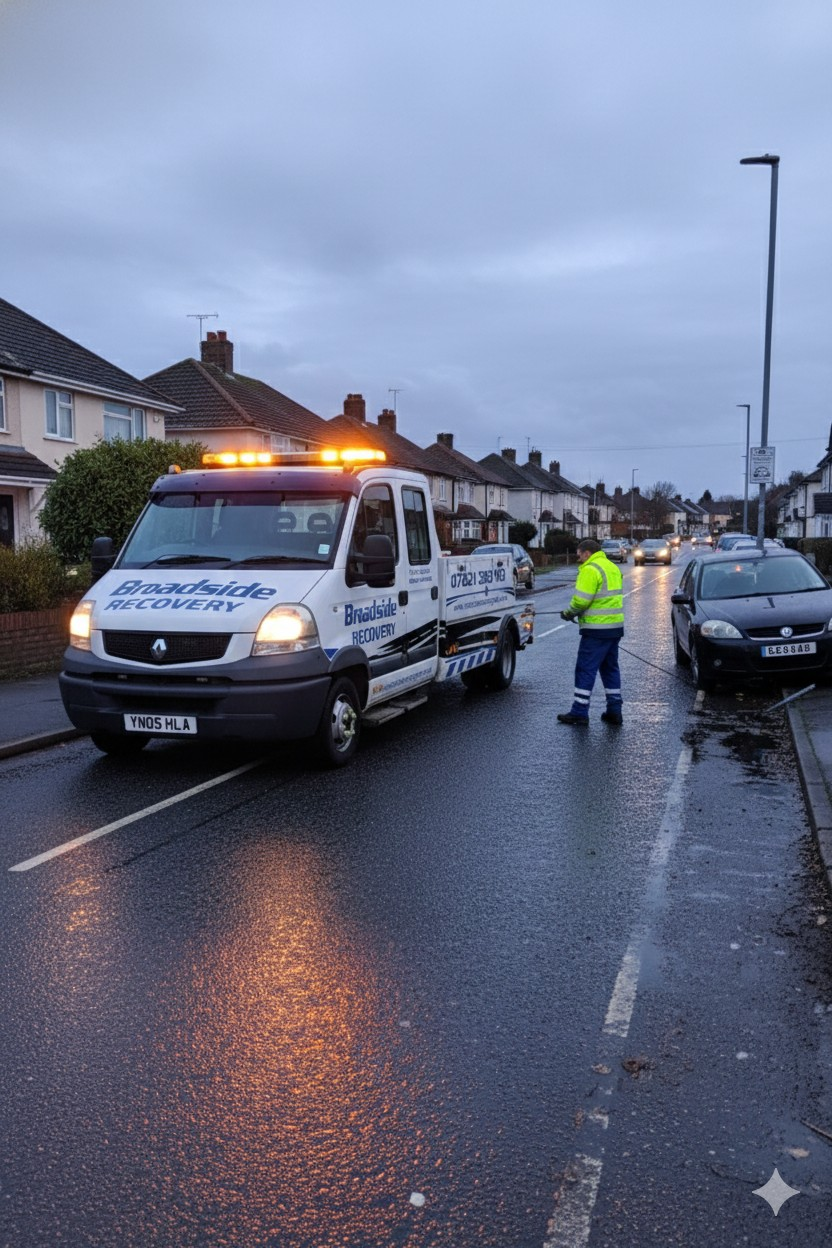
Most motorhome recoveries in this county are not complicated by the vehicle — they are complicated by where it stopped. Soft campsite grass after rain, a coastal car park with a height barrier, or a lane with no turning point for a recovery truck all change the approach.
Tell us the surface, whether there is a barrier, and whether a large vehicle can turn around. If the answer is no, the plan usually becomes a winch or a careful reverse extraction to a wider point.
What happens to your belongings
A motorhome is usually full of possessions and sometimes people's entire holiday. Take valuables, documents, medication and phones with you before the vehicle is loaded, secure loose items inside, and make sure roof lights and lockers are shut.
Gas should be turned off at the bottle. Fridges running on gas must be off before transport.
If it is a campervan conversion
Converted vans — Transporters, Transits, Sprinters and similar — are usually within normal van recovery capability and are loaded like any other van. The difference is weight distribution: a heavily converted van can be considerably heavier than the base vehicle, so quote the plated weight rather than the model.
Need this sorted today?
Have your plated weight and location ready and we will confirm the right truck on the call.
Frequently asked questions
How heavy a motorhome can you recover?
We recover up to 7.5 tons, which covers most panel-van conversions and many coachbuilt motorhomes. Check the maximum authorised mass on your plate or V5 and tell us that figure when you call.
My motorhome is stuck on soft grass at a campsite. Can you get it out?
Usually. That is a winch job before it is a recovery job — the vehicle is pulled onto firm ground first, then assessed for loading. Let us know the surface and how far it is to hard standing.
Can we stay in the motorhome while it is transported?
No. No one may travel inside a vehicle being transported. Passengers ride in the truck cab where there is space, so tell us the number of people when you call.
What about my pets and belongings?
Pets travel with you, not in the loaded vehicle. Take valuables and essentials out before loading, secure everything loose, close roof lights and lockers, and turn the gas off at the bottle.
Services covered in this guide
Related guides
Caravan & Trailer Breakdowns
An outfit is two vehicles, and the recovery plan depends entirely on which one has failed.
Read3.5 Ton vs 7.5 Ton Recovery
One number on your V5 decides which truck comes. Here is where to find it and why it matters.
ReadBreaking Down on Holiday
Unfamiliar roads, no local knowledge and a booking to get to — the practical version for visitors.
Read