
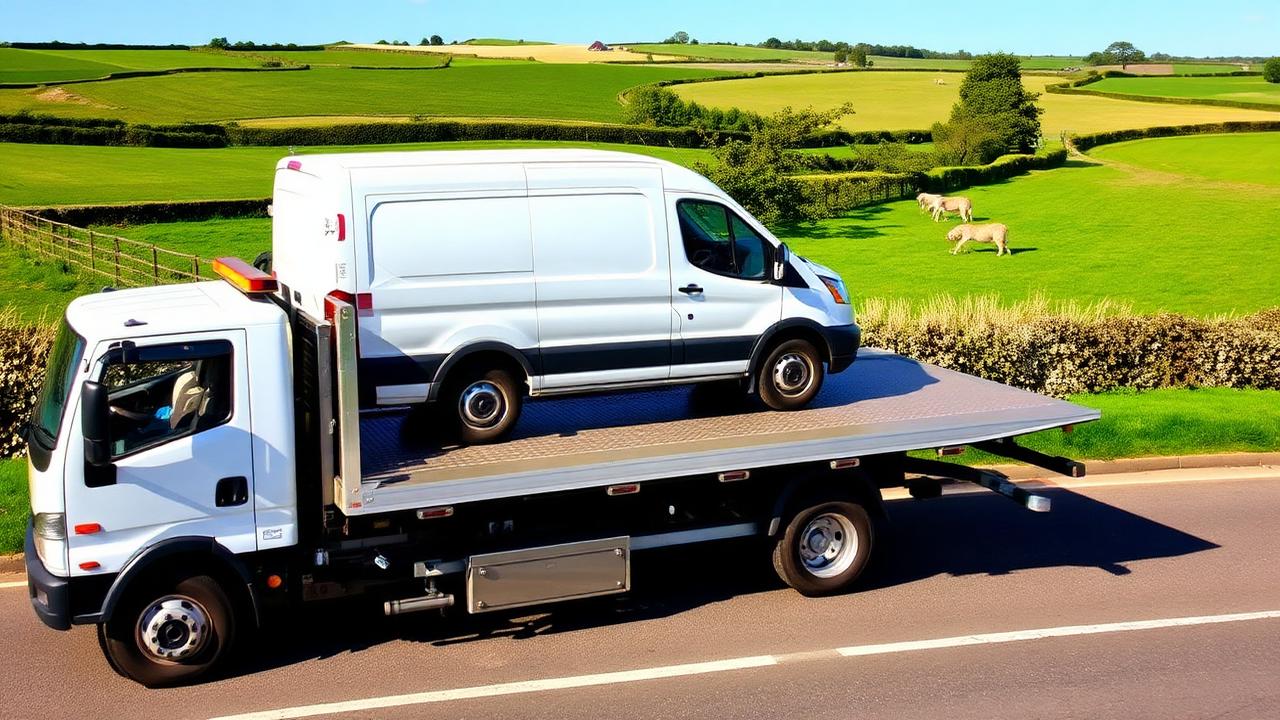
Short answer: cars, small and medium vans and light 4x4s usually need 3.5 ton recovery; long-wheelbase or high-roof vans, light trucks, larger campers and loaded commercials usually need 7.5 ton. The deciding number is the plated maximum weight on your VIN plate or in section F.1 of the V5C, not how big the vehicle looks.
Recovery capability is set by weight, not by what a vehicle looks like. A well-loaded panel van can outweigh a much larger-looking vehicle, and a converted camper can be far heavier than the base van it started as.
Getting the weight right on the call means the correct truck arrives once, rather than a wasted visit followed by a second dispatch.
Where to find your weight
Look for the maximum authorised mass (MAM), also called gross vehicle weight or MTPLM on caravans. It is on the VIN plate — usually in the door shut, under the bonnet or on the B-pillar — and in section F.1 of the V5C.
Use the plated maximum, not the kerb weight, particularly for vans and anything carrying a load.
What each capability covers
- 3.5 ton — cars, small and medium vans, light 4x4s, small trailers and most everyday vehicles
- 7.5 ton — long-wheelbase and high-roof vans, light trucks, larger camper conversions, heavier plant trailers and loaded commercials
Things that push a vehicle up a category
Owners routinely underestimate these:
- A van with a full load of tools, stock or materials still on board
- A camper conversion with a fixed bed, water tanks, batteries and an awning
- A pickup with a hardtop, tow bar, bull bar and off-road tyres
- Twin-rear-wheel and dropside variants of familiar vans
- Anything with a load that cannot safely be removed on the roadside
If you are not sure
Tell us the make, model, wheelbase and whether it is loaded, and we will work it out with you on the phone. That is faster than guessing, and it avoids the frustration of a truck arriving that cannot legally lift your vehicle.
Photographs of the VIN plate are the fastest way to settle it if you have them.
Reading your plate in under a minute
Open the driver's door and look at the door shut or the B-pillar for a small metal or sticker plate. The first weight listed is normally the maximum authorised mass. If it is not there, try under the bonnet, or check section F.1 of the logbook.
Read that figure to us on the phone, or send a photo of the plate by WhatsApp. Either way, we can confirm which truck to send before anyone sets off, and we cover both categories up to 7.5 tons.
Related pages
Need this sorted today?
Read us the plated weight from your VIN plate and we will send the right truck first time.
Frequently asked questions
Where do I find my vehicle's weight?
On the VIN plate in the door shut, under the bonnet or on the B-pillar, and in section F.1 of the V5C. Use the plated maximum authorised mass, not the kerb weight.
Does the load in my van count?
Yes. Recovery capacity is against the actual weight lifted, so tools, stock and materials all count. If a load can be safely removed at the roadside, that can sometimes bring a job into the lower category.
My van looks small but is a long wheelbase. Which is it?
Long-wheelbase and high-roof vans are frequently plated close to or above 3.5 tons, especially when loaded. Give us the model and wheelbase and we will check before dispatch.
What happens if I get the weight wrong?
If the truck sent cannot legally or safely lift the vehicle, the job needs a second dispatch — a delay for you and an avoidable one. Five minutes checking the plate prevents it.
Is 3.5 ton recovery cheaper than 7.5 ton?
The price depends on the job as a whole, including distance and access. We give you the figure on the call once we know the weight.
Can I send a photo of my VIN plate?
Yes. A photo by WhatsApp is the quickest way to settle which truck you need.
Services covered in this guide
Related guides
Motorhome & Campervan Recovery
Weight, height and access are the three things that decide whether a motorhome recovery goes smoothly — check them before you call.
ReadFlatbed vs Tow Truck
Why the wrong lift can damage a gearbox or bumper, and how to tell which method your vehicle actually needs before the truck arrives.
ReadFleet & Trade Van Breakdown Planning
For a trades business, the van failing is a lost day. A small amount of preparation cuts that to hours.
Read