
When you are stood on a verge with a dead car, the last thing you want is a bill that turns into a negotiation once the truck is loaded. Most of the confusion around recovery pricing comes not from operators being unclear, but from customers not knowing what questions to ask before the job starts.
A recovery price is not a single number pulled from a price list. It is built from a handful of variables — distance, vehicle, access, timing and condition — and a competent operator can talk you through each one on the phone before a truck ever moves. This guide sets out how that build-up works, so you know what a fair quote looks like and what to ask if a figure seems vague.
None of this is about finding the cheapest number. It is about knowing what you are paying for, so the price agreed on the phone is the price you pay on the driveway.
What actually goes into a recovery bill
Every job has a base call-out element that covers the truck being dispatched and the first stretch of travel, and then a variable element on top that reflects the specifics of your situation.
Understanding which bucket each cost sits in makes it much easier to see why two seemingly similar jobs can come out at different prices.
- Call-out and mileage — getting the truck to you and then on to the destination
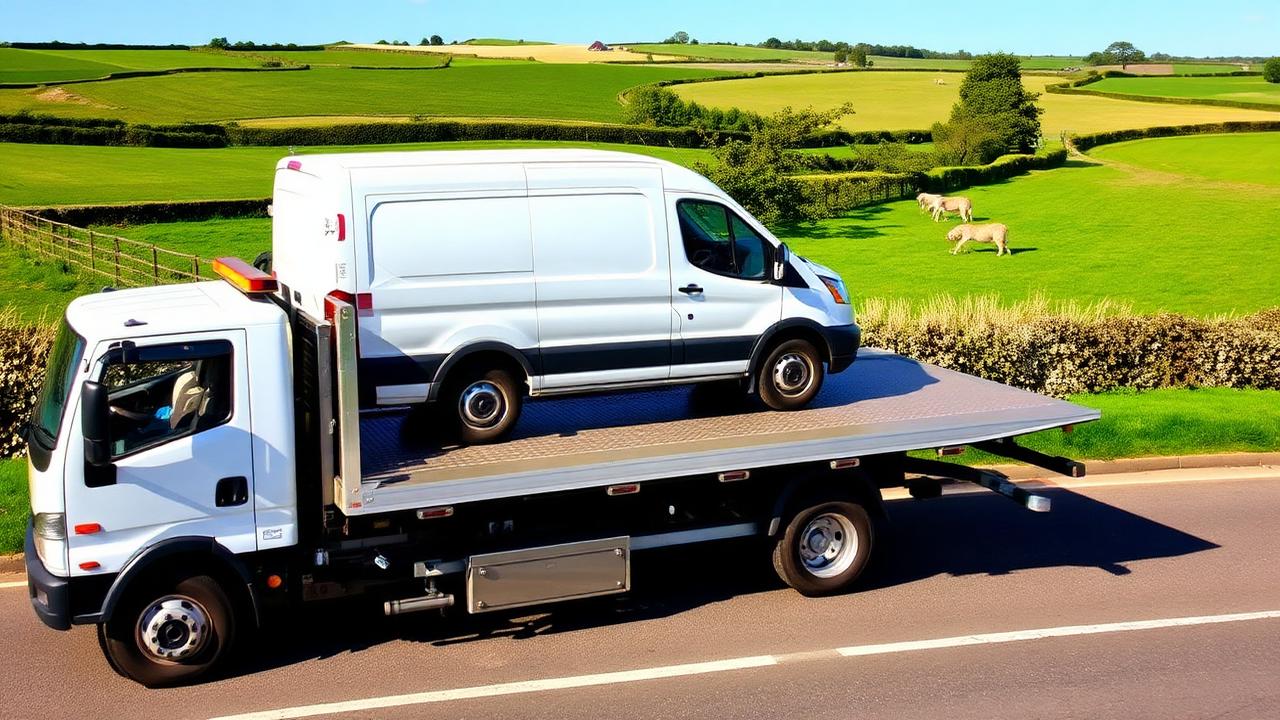
- Vehicle size and weight — a 3.5 ton flatbed setup versus a 7.5 ton one for vans and light trucks
- Recovery method — a straightforward drive-on load versus a winch recovery from a ditch or verge
- Labour time on scene — how long it takes to secure, load and strap the vehicle safely
- Time of day — an immediate emergency dispatch versus a scheduled daytime slot
- Any extra equipment needed — skates, dollies, or additional strapping for an unusual load
Getting a quote you can trust
A quote given without any information about your vehicle or location is not a quote, it is a guess. A trustworthy operator will ask specific questions before giving you a figure, because those answers are what the price is based on.
If you are given a firm number over the phone, ask what it covers and what would change it. A good operator will tell you plainly — for example, that the price assumes the car rolls and steers, and that a seized wheel would need to be discussed again on arrival.
- Exact location, including postcode or what3words if you are somewhere hard to describe
- Make and model, and roughly how much the vehicle weighs
- Whether the vehicle rolls, steers and brakes normally
- Where the vehicle needs to end up — home, a garage, or storage
- Whether it is on a live road, a verge, a driveway or off the hard surface entirely
Avoiding on-arrival surprises
Most disputes over recovery costs come from a mismatch between what was described on the phone and what the driver actually finds. If your car is described as parked on a verge but is in fact half in a ditch, the job has changed and so has the price.
The way to avoid this is simple honesty at the point of booking. Describe the situation as it actually is, including anything that might slow the driver down, and ask the operator to confirm that the price will only change if the situation on arrival is materially different.
Breakdown membership versus pay-as-you-go recovery
Membership schemes bundle recovery into an annual fee, which suits people who break down often or who want the reassurance of one number regardless of the road. Pay-as-you-go recovery means you only pay when you actually need the truck, which suits infrequent drivers or anyone whose current cover has exclusions they are not aware of.
Neither option is automatically cheaper — it depends on how often you actually use it, and what your membership does and does not cover.
- Membership can exclude callouts within a certain distance of home, or cap the number of uses per year
- Membership often has weight and vehicle-type limits that exclude vans, campervans or modified cars
- Pay-as-you-go recovery has no annual commitment, but every job is priced individually
- Independent recovery can sometimes respond faster locally than a national network dispatching from further away
- Some membership policies only cover the vehicle, not the driver, which matters if you drive more than one car
Why distance and geography matter more in Cornwall
Cornwall's road network is long and narrow, with most through-traffic funnelled onto the A30 and A38. Once you are off those routes, journey times to a garage or storage yard can be considerably longer than the map distance suggests, especially down single-track lanes near the coast.
This is why an operator based locally, who already knows the lanes around Bodmin, Truro or Penzance, can often price and complete a job more efficiently than a national call centre dispatching a subcontractor from outside the county.
Questions worth asking before you agree a price
A short checklist before you say yes to any quote:
- Does this price include the full journey to my destination, or just the recovery itself?
- What happens if the vehicle turns out to be harder to reach than described?
- Is there a call-out charge on top of the mileage rate?
- Will I be told before any extra charge is added, or only after the job is done?
- Is payment expected on completion, and what methods are accepted?
Need this sorted today?
Call and describe your situation honestly and we will give you a clear, straight figure before the truck sets off.
Frequently asked questions
Why did my recovery cost more than a friend's similar job?
Even similar-looking breakdowns can differ in distance, access, timing or vehicle weight, all of which affect the price. A short job down a difficult lane can cost more than a longer, straightforward motorway-style run.
Should I always ask for a fixed price before the truck sets off?
Yes. A reputable operator will give you a figure based on what you describe, and should tell you clearly if anything found on arrival would change it. This avoids arguments once the vehicle is already loaded.
Is it cheaper to book a non-emergency transport slot instead of an immediate recovery?
Often, yes, if your vehicle is safely off the road and nothing is time-critical. An immediate dispatch is priced differently to a job that can be fitted into a planned route later in the day.
Do breakdown memberships always work out cheaper than paying per job?
Not necessarily. It depends on how often you break down, what your policy excludes, and whether your vehicle falls within its weight and type limits. Someone who rarely breaks down may pay more in membership fees than they would for the occasional recovery.
Will I be charged extra for a recovery late at night?
Out-of-hours emergency dispatch is generally priced differently to a daytime job, because the truck is sent immediately rather than scheduled. If the vehicle is safe where it is, waiting for a daytime slot can reduce the cost.
What if I only need the vehicle moved a short distance?
Short local moves still involve a call-out and loading time, so the price is not simply proportional to mileage. Explain the full situation when you call so the quote reflects the actual job rather than just the distance.
Services covered in this guide
Related guides
Cheap Car Recovery: What to Check
The cheapest recovery is the one that is quoted clearly, turns up with the right truck and gets the car to the right place first time.
ReadWhat Vehicle Recovery Costs in Cornwall
The six factors that actually move the price of a recovery job, and how to describe your situation so the quote you get is the price you pay.
ReadBreakdown Cover vs Independent Recovery
The honest comparison — including when your existing policy is genuinely the better option and you should use it.
ReadAfter a Breakdown, and Who Pays
The recovery is the easy part. This is what happens to the vehicle afterwards, and who ends up settling the bill.
Read