
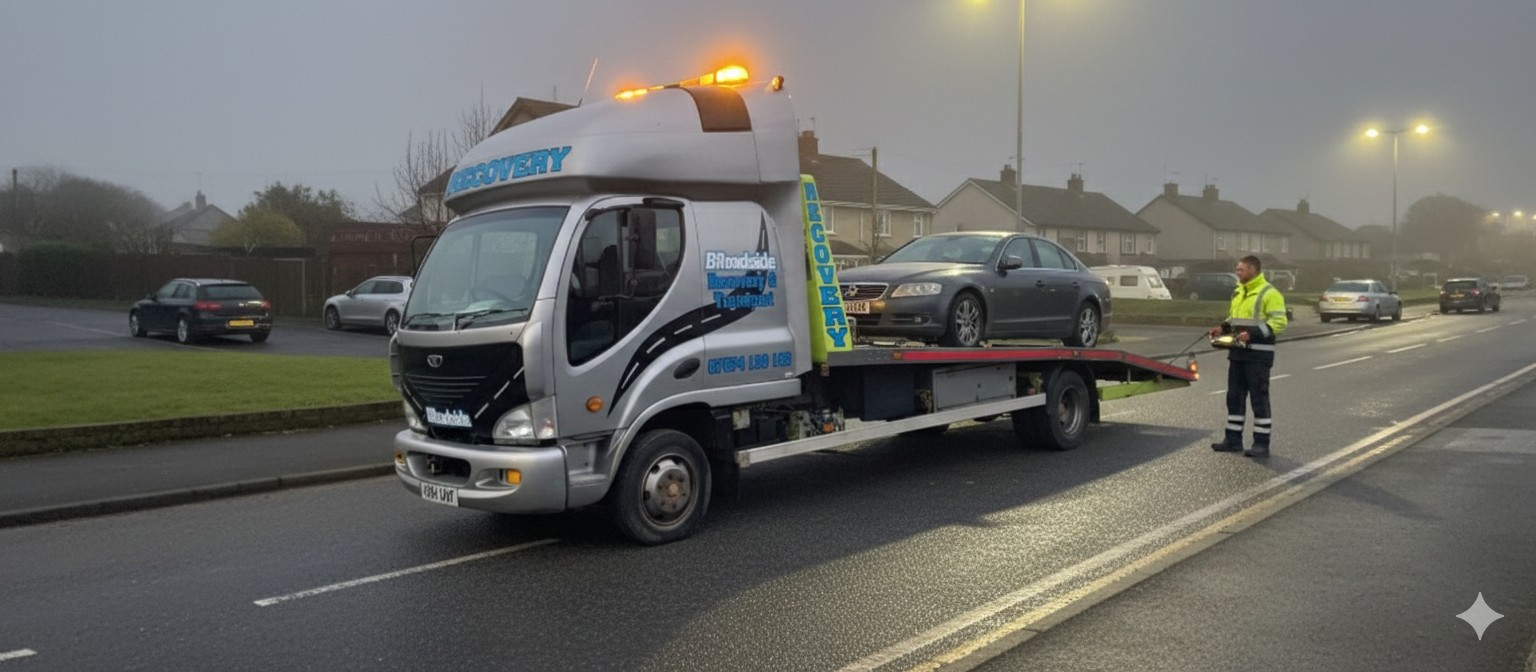
A breakdown and an accident are treated quite differently by most car insurance policies, and this catches a lot of people out at the roadside. If your engine fails, your battery dies, or you get a puncture on the A38, your standard motor insurance often has little or nothing to do with getting you moving again.
This guide explains, in general terms, how breakdown situations usually interact with insurance and separate breakdown cover, what evidence is worth keeping, and where a warranty might come into play instead. Policies vary considerably, so treat this as a starting point for checking your own documents rather than a substitute for them.
Insurance vs breakdown cover: two different products
Standard car insurance is generally there to cover damage, injury and liability arising from an accident, theft or certain other insured events, not mechanical failure. Breakdown cover, whether bought separately or bundled with your insurance, is the product that typically pays for roadside assistance and recovery when a vehicle simply stops working.
It is entirely possible to have comprehensive car insurance and no breakdown cover at all, in which case a mechanical failure can leave you paying for recovery yourself. Checking which of these you actually hold, rather than assuming, is worth doing before you need it.
- Car insurance: typically covers accidents, theft, fire and third-party liability
- Breakdown cover: typically covers mechanical failure, flat batteries, punctures and running out of fuel
- Some policies bundle basic breakdown cover as an add-on or included extra
- Cover levels vary from roadside-only to home start and onward travel
What breakdown cover usually includes
Breakdown policies vary widely between providers and tiers, but common inclusions are roadside assistance to attempt a fix on the spot, recovery to a garage if it cannot be fixed there, and sometimes home start if the vehicle won't start on your own driveway.
Higher tiers may include onward travel arrangements or recovery of the vehicle plus occupants to a single UK destination, which can matter if a breakdown happens a long way from home, as can easily happen travelling to or from Cornwall.
- Roadside assistance to attempt a repair at the scene
- Recovery to a nearby garage if it cannot be fixed roadside
- Home start cover if the vehicle fails to start at home
- Onward travel or vehicle recovery to a single destination on some policies
- Mileage limits or a maximum distance on some cover levels
When mechanical failure and insurance do overlap
There are some situations where insurance and breakdown genuinely overlap, for example if a mechanical failure causes an accident, such as a tyre blowing out and the vehicle leaving the road. In that case the insurer may become involved in the resulting damage claim even though the root cause was mechanical.
Some comprehensive policies also include limited European breakdown cover or a courtesy car benefit, so it is worth checking the small print rather than assuming a standard policy definitely excludes everything mechanical.
Paying for recovery yourself vs claiming
If you do not have breakdown cover, or your cover does not stretch to your situation, you can usually arrange recovery yourself directly with an independent firm and pay for it, without involving your insurer at all. This is often simpler for a straightforward mechanical breakdown with no accident involved.
If the breakdown is linked to a wider claim, for example a warranty dispute or a fault that later needs investigating, it is worth keeping the recovery invoice and any paperwork in case it becomes relevant to a later claim against a dealer, manufacturer or warranty provider.
- Get a clear invoice or receipt for any recovery you pay for yourself
- Keep any diagnostic notes from the recovery driver or garage
- Note the date, location and reported fault at the time
- Check whether a warranty claim requires an approved recovery route
Warranty routes for mechanical failure
If your vehicle is under a manufacturer or extended warranty, a mechanical failure may be covered under that instead of, or alongside, breakdown cover. Warranty providers sometimes specify an approved garage or recovery process, so it is worth checking the terms before arranging your own recovery if you intend to claim.
Using an independent recovery firm to get the vehicle to an approved garage is usually acceptable, but keeping the receipt and confirming the destination with the warranty provider first can avoid a dispute later.
Evidence worth keeping after a breakdown
Whether or not you plan to claim on anything, it is sensible to keep a simple record after a mechanical breakdown, particularly if the fault recurs or later develops into something more serious.
This record can also help a garage diagnose the problem faster and gives you something concrete if you later query a bill or a warranty decision.
- Date, time and location of the breakdown
- What symptoms or warning lights appeared beforehand
- Recovery invoice or job reference
- Any diagnostic codes or notes from the recovery driver or garage
Need this sorted today?
If you've broken down without cover in place, call Broadside Recovery on 07874 130193 for straightforward recovery across Cornwall.
Frequently asked questions
Does my car insurance pay for recovery after a breakdown?
Usually not, unless you also have breakdown cover, either standalone or bundled with your policy. Standard car insurance is generally aimed at accidents, theft and liability rather than mechanical failure.
What's the difference between roadside assistance and recovery?
Roadside assistance usually means an attempt to fix the fault on the spot, such as jump-starting a battery, while recovery means transporting the vehicle to a garage or other destination because it cannot be fixed there.
Can I just pay for recovery myself instead of claiming?
Yes, in most cases you can arrange and pay for recovery directly with an independent firm without involving an insurer or breakdown provider at all, which is often the simplest option for a one-off mechanical fault.
Will a warranty cover the cost of recovery?
Some manufacturer or extended warranties include recovery to an approved garage as part of the cover, but this varies, so it is worth checking your warranty documents or calling the provider before arranging recovery yourself if you plan to claim.
Does it matter which recovery firm I use for a warranty claim?
It can, if the warranty provider specifies an approved recovery process or garage network. Checking first can avoid a dispute over the claim later, though using an independent firm to get the vehicle there is usually acceptable.
Services covered in this guide
Related guides
Car Been in Floodwater
Water in an engine or electrics can turn a recoverable car into a write-off in seconds. The first rule is simple: do not turn the key.
ReadVehicle Recovery After a Non-Fault Accident
What non-fault claims usually involve, why some firms push you toward credit hire, and how to keep control of recovery, storage and repair choices.
ReadUsing Dashcam Footage After an Accident
Practical steps for saving dashcam footage after a collision so it is not overwritten, and what to expect when sharing it with insurers or police.
ReadThe Accident Recovery Process Explained
A plain walkthrough of what happens from the moment a collision is reported to the vehicle arriving at a garage or storage yard.
Read