
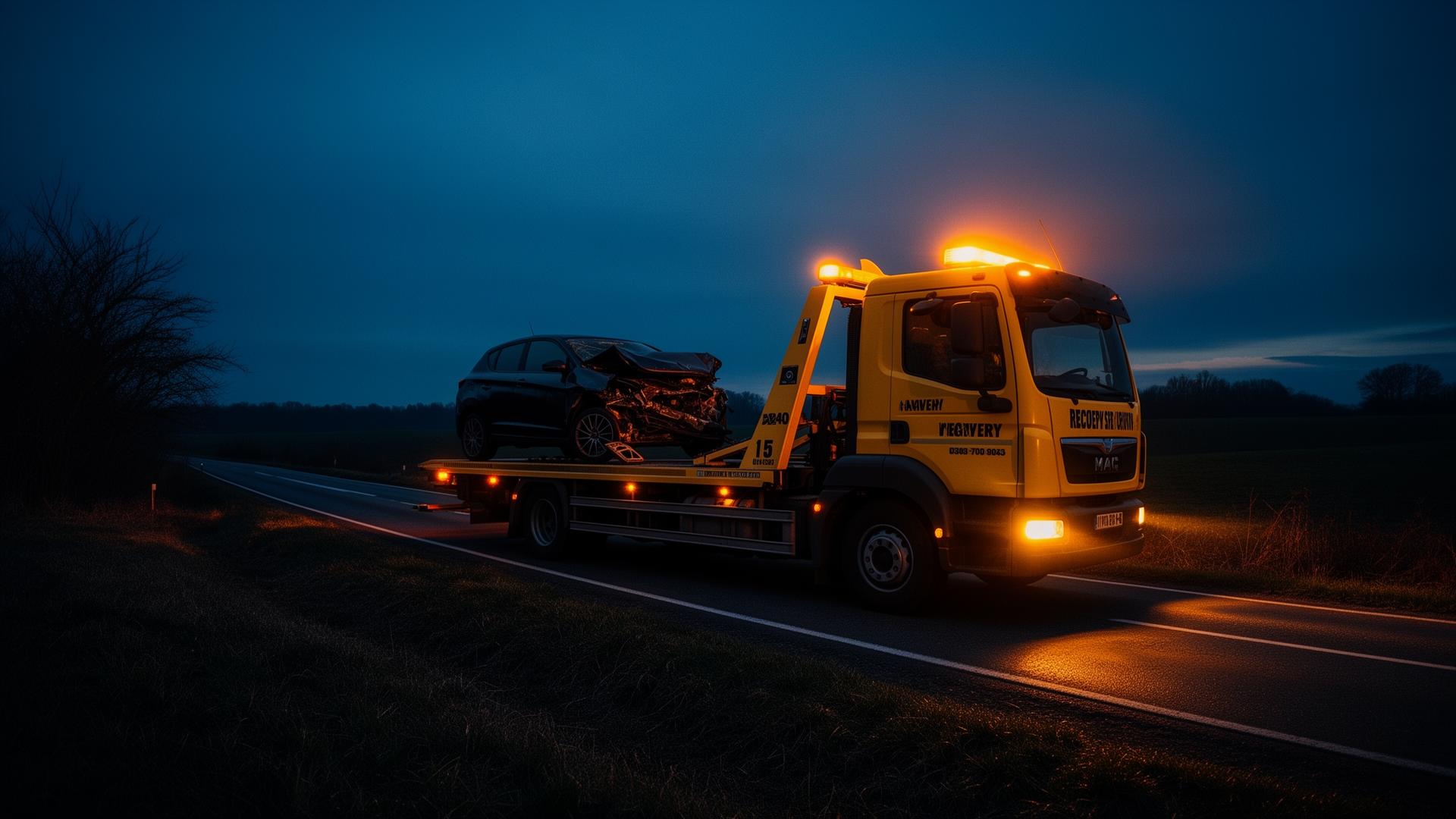
A tyre blowout is sudden, loud and alarming, but the outcome depends far more on what the driver does in the first few seconds than on the failure itself. Most blowouts are survivable without incident when the driver reacts calmly rather than instinctively.
This guide covers what a blowout actually feels and sounds like, how to keep control of the vehicle, where and how to stop safely, and what typically happens once you are off the road. It applies on any road, but the advice becomes especially important on fast dual carriageways like the A30, where there is little room for error.
None of this replaces checking your tyres regularly, which remains the single best way to avoid a blowout in the first place.
What a blowout actually feels like
A blowout is usually sudden rather than gradual — a bang, a loud hiss, and an immediate pull to one side as the tyre loses air and structure all at once. It is quite different from a slow puncture, which usually gives you a warning of vibration or a gentle pull over some distance.
The steering will typically feel heavy and want to drag towards the side of the failed tyre, and the back of the car may feel unsettled if the failure is on a rear tyre. Recognising this quickly, rather than assuming something else has gone wrong, is the first step to reacting correctly.
- A loud bang or pop, sometimes followed by a flapping or slapping noise
- A sudden strong pull to one side
- Vibration through the steering wheel or the whole car
- A change in road noise as the tyre disintegrates
- The car feeling noticeably lower or unsettled on one corner
How to keep control in the first few seconds
The instinct to brake hard or swerve is the worst reaction to a blowout, because it can unsettle the car further and cause a loss of control. The correct response is almost the opposite of instinct.
Grip the wheel firmly, ease off the accelerator without stamping on the brake, and let the car's speed reduce naturally while you steer smoothly to keep it straight in the lane. Only once the car has slowed and stabilised should you brake gently and begin working towards a safe stopping point.
- Do not brake hard or suddenly — let the car slow down gradually
- Grip the steering wheel firmly with both hands and resist the pull
- Avoid sudden steering movements or swerving to change lanes
- Signal early once the car is stable to move towards the hard shoulder or verge
- Only apply the brakes gently once speed has already dropped and the car is under control
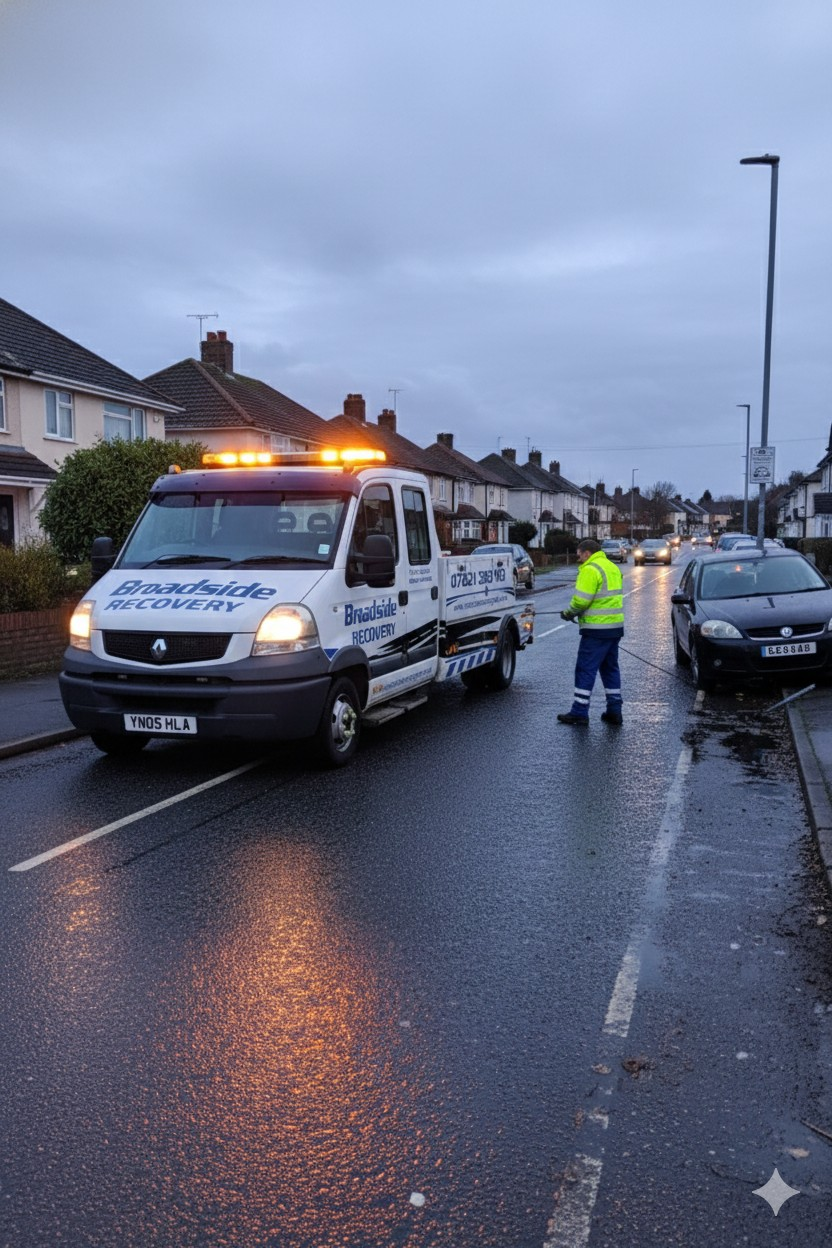
Stopping safely, especially on a dual carriageway
Once the car is under control, the priority is getting it as far off the live carriageway as possible before stopping completely. On a road like the A30, this can mean travelling on a damaged tyre for a short distance at low speed to reach a layby, slip road or wide verge, rather than stopping in a running lane.
Use hazard warning lights as soon as it is safe to do so, and once stopped, get everyone out of the vehicle and behind a barrier if one is present, well away from the live carriageway. A vehicle stopped on the hard shoulder of a fast road is still in a dangerous position.
- Aim for a layby, slip road or wide verge rather than stopping in a live lane
- Put hazard warning lights on as soon as you begin slowing
- If on a fast dual carriageway, get out of the vehicle and behind a barrier if there is one, away from traffic
- Keep children and pets inside a seatbelt-secured vehicle only if there is genuinely nowhere safer to wait
- Place a warning triangle well behind the vehicle only if it is safe to walk back and do so
What causes a blowout
Blowouts are rarely completely random — most have a build-up of contributing factors, and understanding them is the best way to reduce the chance of one happening to you.
Underinflation is the single biggest cause, because a soft tyre flexes more, builds up heat, and eventually fails structurally, often at speed on a warm road surface.
- Underinflated tyres running hot and flexing excessively
- Worn or damaged tread that has lost structural integrity
- A pothole or kerb impact that damages the sidewall without immediately failing
- Overloading the vehicle beyond the tyres' rated capacity
- Old tyres, even with plenty of tread, where the rubber compound has hardened and cracked
Dealing with the tyre itself once stopped
Once safely off the road, assess whether it is safe to change the wheel yourself. On a busy dual carriageway hard shoulder this is genuinely dangerous and best left to a recovery service, whereas on a quiet verge or layby it may be manageable if you have a usable spare and the right tools.
Many modern cars no longer carry a full-size spare, and a blown tyre is often too damaged for a puncture repair kit to help at all, since blowouts frequently tear the sidewall rather than leave a simple puncture hole.
When to call for recovery
Recovery is the sensible choice whenever changing the wheel yourself is unsafe, when there is no usable spare, when the wheel or suspension may also be damaged, or when the location makes a roadside change too risky.
In Cornwall, blowouts on the A30 or A38 during busy summer traffic, or on narrow coastal lanes with no verge to pull onto, are situations where waiting for a recovery vehicle is safer than attempting a change at the roadside.
Need this sorted today?
If a blowout leaves you without a usable spare or somewhere unsafe to change a wheel, call us and we will get you off the road safely.
Frequently asked questions
Should I brake immediately after a blowout?
No. Braking hard can unsettle the car further and increase the risk of losing control. Ease off the accelerator, keep the steering steady, and only brake gently once the car has already begun to slow.
Can I keep driving on a blown tyre to reach a safer spot?
Yes, briefly and at low speed if the only alternative is stopping in a live traffic lane. Travel just far enough to reach a layby, slip road or wide verge, then stop.
Is it safe to change the tyre myself on a dual carriageway?
Generally no, particularly on the hard shoulder of a fast road like the A30, where passing traffic makes roadside tyre changes genuinely dangerous. It is safer to call for recovery and wait somewhere protected.
What causes most blowouts?
Underinflated or worn tyres running hot at speed are the most common cause, often combined with an underlying weakness such as sidewall damage from a previous kerb or pothole impact.
Will my insurance cover a blowout?
This depends on your policy and any breakdown cover attached to it, and on whether the blowout caused any further damage to the vehicle. Check your specific policy documents rather than assuming either way.
Can a repair kit fix a blowout?
Usually not. A puncture repair kit is designed for small, clean punctures, whereas a blowout often tears or shreds the tyre structure, including the sidewall, which cannot be sealed.
Services covered in this guide
Related guides
Punctures and Spare Wheels Explained
What your car actually carries instead of a spare wheel, how each option works, and when a puncture genuinely needs a recovery vehicle rather than a roadside fix.
ReadBroken Down on the A30
The A30 is the county's spine and its fastest road. Here is the safe sequence if you stop on it.
ReadTowing Eyes & Recovery Points
Two minutes of checking before the truck arrives can prevent a bent subframe or a torn bumper.
Read