
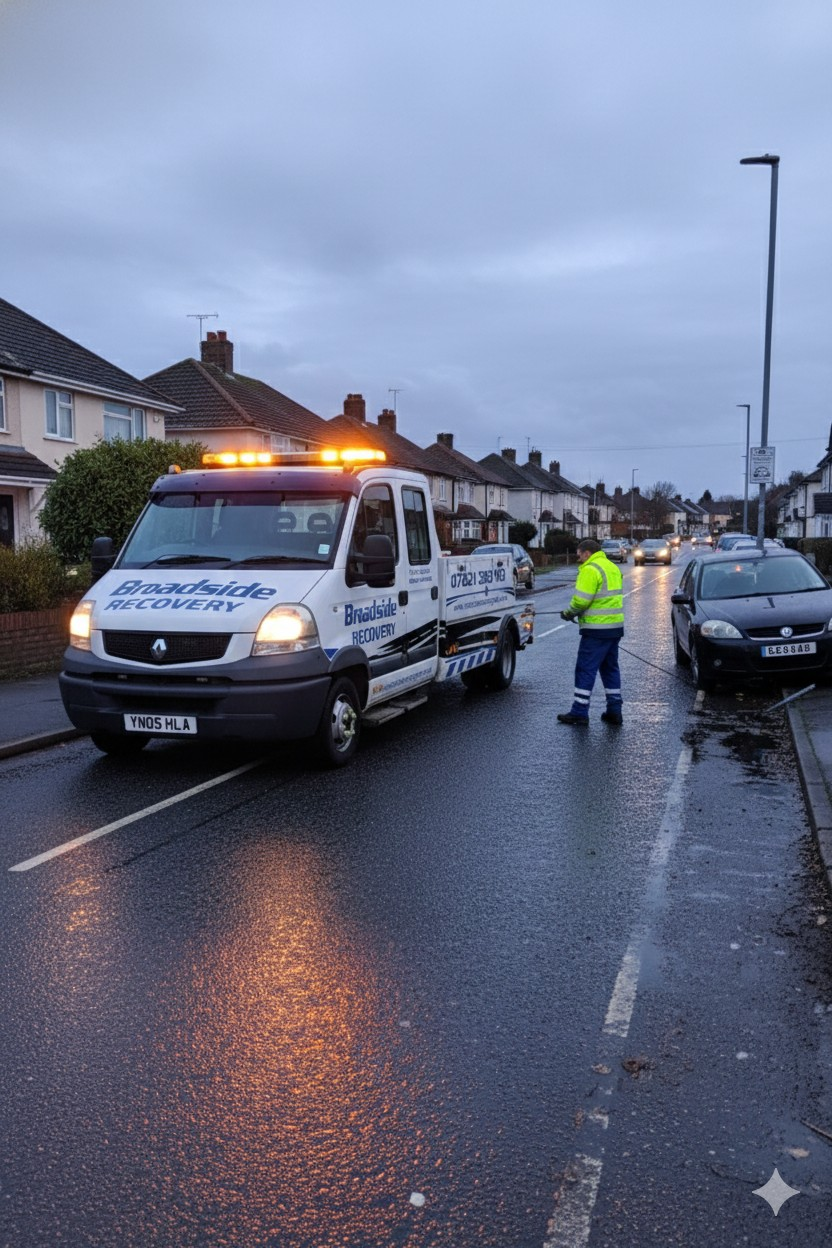
No, towing eyes are not all the same. Length, thread and the socket position differ between makes and models, many are left-hand threaded, and an eye from another car may not fit or hold safely. Use the eye supplied with your vehicle, usually stored with the jack or spare wheel.
Almost every modern car has a screw-in towing eye stored with the jack, and a threaded socket behind a removable panel in the bumper. Very few owners know where either is until the day they need them.
It matters, because a winch line attached to the wrong part of a car damages the car.
Where the eye normally lives
Check the boot floor with the spare wheel or tool kit, the underside of the parcel shelf, or a foam tray in the boot side panel. Some vehicles keep it in the glovebox.
The socket is usually behind a small square or round push-out panel in the front or rear bumper. It is often threaded left-hand, so it can feel like it is not tightening when in fact you are undoing it.
Why it matters for recovery
The eye screws into a reinforced structural mount designed to take a pull. Bumper bars, suspension arms, subframe edges and tie-down lugs used for shipping are not designed for the same loads and can deform or tear.
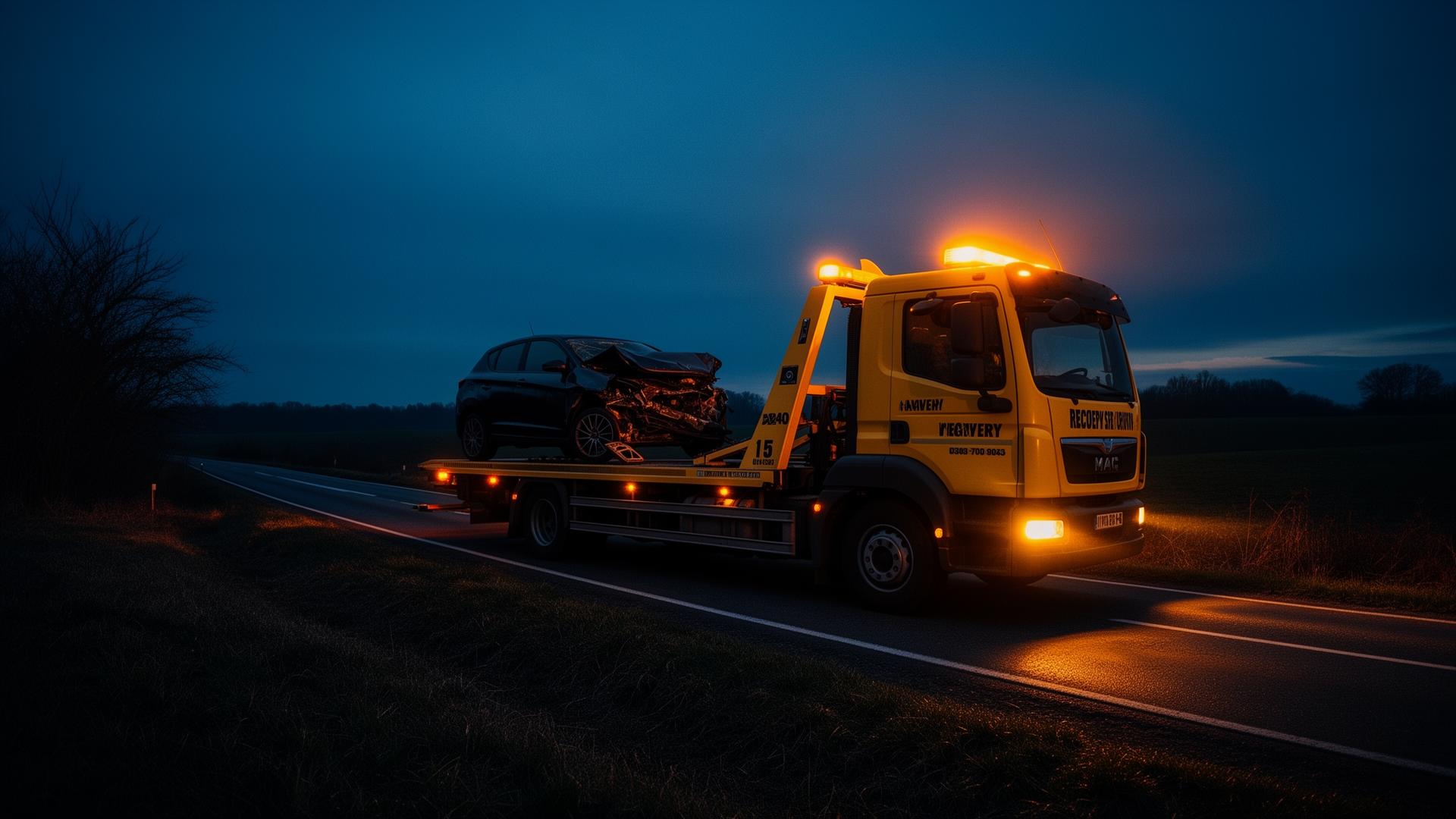
If the eye is missing, recovery still happens — the driver uses chassis points, straps or skates instead — but it takes longer and offers fewer options in tight spaces.
Check these now, not later
- Do you have the towing eye, and does it thread in cleanly?
- Can you locate and remove the bumper access panel without breaking it?
- Do you know where the locking wheel nut key is?
- For a used vehicle, has anyone confirmed the eye is present at all?
Vans, 4x4s and modified vehicles
Vans usually have fixed towing eyes under the front, though they can be obscured by aftermarket bumpers or steps. Off-road-modified vehicles often have recovery points fitted that are stronger than standard — mention them, because they change the options available.
Lowered or heavily modified cars sometimes have no usable factory point at all. That is worth knowing before the truck arrives rather than during the load.
Why a borrowed eye is a bad idea
An eye that screws in only part of the way, or on a slightly different thread, can pull out or damage the socket under load. That is exactly the moment a winch line is taking the full weight of the car.
If yours is missing, do not improvise with a strap around the bumper. Tell us on the call and we will bring the right kit; the vehicle can still be recovered using proper chassis points, straps or skates.
Related pages
Need this sorted today?
Missing your towing eye? Tell us on the call and we will bring the right kit anyway.
Frequently asked questions
What if I do not have a towing eye?
The vehicle can still be recovered using chassis points, straps or skates. It simply takes longer and gives the driver fewer options in a confined space, so it is worth checking you have one.
Can the recovery driver just hook onto the bumper?
No. Bumper bars, suspension arms and shipping lugs are not designed for winch loads and can deform or tear. Only a designated recovery point or a proper chassis point is used.
Why will my towing eye not tighten?
Many are left-hand threaded, so the direction you expect to tighten actually loosens it. Try turning the other way before assuming the thread is damaged.
Do electric vehicles have towing eyes?
Most do, and they are used for winching onto a flatbed. EVs still must not be towed with driven wheels on the ground, so the eye is for loading, not for towing.
Will a towing eye from another car fit mine?
Not reliably. Threads and lengths vary, and a poor fit can pull out under load. Use the one that came with your vehicle.
Where is the socket for the towing eye?
Usually behind a small push-out panel in the front or rear bumper. It is often threaded left-hand, so turn it the opposite way to normal if it will not tighten.
Services covered in this guide
Related guides
Flatbed vs Tow Truck
Why the wrong lift can damage a gearbox or bumper, and how to tell which method your vehicle actually needs before the truck arrives.
ReadMoving a Non-Runner
Seized, keyless, wheel-less or simply dead — how each type of non-runner is actually loaded.
ReadElectric Vehicle Recovery
EVs cannot be conventionally towed. Here is why, plus what to do if you run flat between chargers in Cornwall.
Read