
If the car is smoking, overheating, losing braking or steering, making a new severe noise, or cannot be controlled normally, do not continue your journey. Move to a safe stopping place if you can do so without increasing the danger, switch off and ask for help. If you are in immediate danger or there has been an injury, call 999 first. You do not need to diagnose the fault at the roadside before deciding that it is unsafe to carry on.
A warning light on its own does not tell us everything. The behaviour of the car, where you are stopped and whether it can still be moved safely all matter. This guide helps you make the first decision; it is not a remote diagnosis or a promise that a particular vehicle is safe to drive. If you are unsure, ring Broadside Recovery on 07874 130193 and describe what you can see, hear and smell before moving it any further.
First, deal with the road you are on
On a fast road, your first job is to get out of moving traffic if the vehicle will respond safely. Put your hazard lights on and aim for a slip road, lay-by or other safe stopping place rather than trying to make it home. Do not take a faulty vehicle miles farther simply because you know a garage at the end of the route. If it cannot move safely, stop where you must and make your own safety the priority.
Once stopped on a dual carriageway or other fast road, leave the vehicle on the side away from traffic when safe, move behind a barrier if there is one, and do not stand beside the car in a live traffic area. A quiet lane presents a different risk: do not walk into traffic or attempt a repair in an exposed position. Tell the recovery driver exactly where you are, not just the nearest town.
Overheating, steam or a burning smell
If the temperature is climbing or you see steam, stop in a safe place and turn the engine off. Trying to squeeze in one more journey can turn a cooling problem into engine damage. Do not open a hot cooling system. Let it cool and arrange help rather than lifting the cap at the roadside.
Smoke or a strong burning smell changes the decision again. Get people clear of the vehicle and call emergency services if there is a fire or immediate danger. Do not restart it to see whether the symptom has gone away. When you ring for recovery, explain whether you saw steam or smoke, whether a warning appeared and whether there has been any accident damage. Those details affect how the vehicle can be approached and loaded.
Tyre damage, braking or steering changes
A tyre that has blown out is not a tyre to drive home on. Keep control while the car slows: hold the wheel steadily, avoid sudden steering or hard braking and work towards a safe place to stop. That is an emergency manoeuvre to leave danger behind, not permission to continue your trip on a damaged tyre.
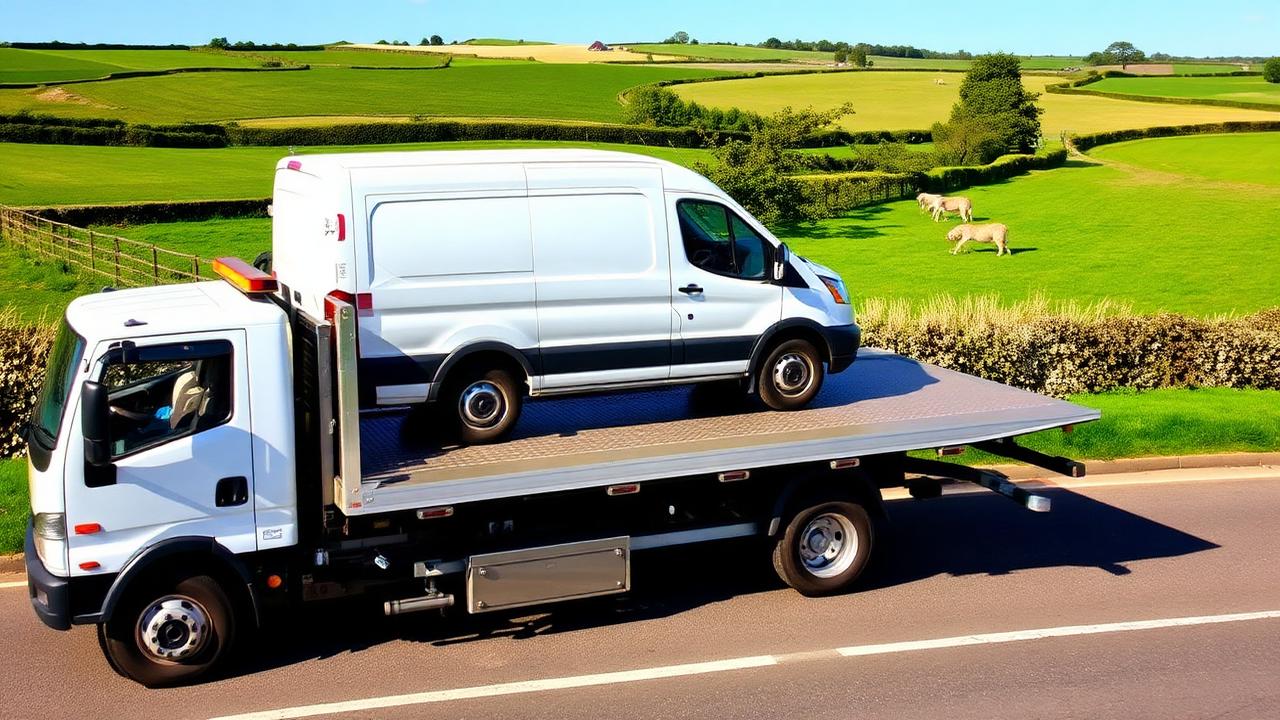
The same stop-and-assess approach applies when the brakes feel different, the steering suddenly pulls or the car no longer tracks as expected. Do not assume a change is minor because it appeared close to home. If the car cannot be driven and stopped reliably, request recovery. Roadside help may be possible for a flat tyre where there is a safe place to work; if not, a flatbed move may be needed.
A warning light or noise without an obvious breakdown
Do not try to identify a fault from the colour of a light alone while driving. If the light is accompanied by loss of power, overheating, odd noises, a smell, smoke or a change in braking or steering, stop safely and do not continue. Write down the message as it appears on the dashboard so you can describe it accurately when you call. A photo taken only after you have stopped can help.
If the vehicle is stopped safely and seems otherwise normal, consult its handbook for that exact warning before deciding whether to move it. There is no universal mileage or time that can be promised for an unexplained warning. Broadside's breakdown service asks callers to describe warning lights, smells and noises; a real conversation is more useful than guessing from a generic list. If you cannot tell whether the car is safe, do not test it by driving farther.
The car will not start, or it runs out of charge
If you are parked at home or in a car park and the engine will not start, there is usually no decision about driving on: the question is whether roadside help can resolve it or whether the vehicle must be moved. The site lists jump starts, battery assistance and minor faults under roadside assistance, with recovery to a garage if a safe fix is not possible. A repeated no-start is a reason to get the underlying fault checked rather than rely on another jump start.
An electric vehicle that has run out of charge needs a different plan. Electric vehicles travel on a flatbed with all four wheels off the ground, not by conventional towing with driven wheels rolling. If there is heat, smoke, collision damage or a high-voltage warning, keep clear and call 999 before arranging routine recovery. Tell the team the make and model, what the dashboard says and whether the car can roll.
What to say when you call
Give your exact location first: a road name and direction, nearby junction, postcode or what3words address. Then explain the vehicle type, what happened before it stopped, what has changed since, and whether it rolls, steers and brakes. Tell us about passengers, accident damage or a difficult loading position. You do not have to name the failed part. The recovery team can discuss whether roadside assistance is realistic or whether the vehicle should be loaded.
Broadside Recovery is based at Pool near Redruth and operates a 24/7 Cornwall breakdown service for cars, vans and light trucks up to 7.5 tonnes. We agree a price before dispatch, with no membership needed. Where the vehicle cannot safely continue, we can take it to a chosen garage, home or another agreed destination. Calling does not commit you to driving it farther; it gives you a way to discuss the safe next step.
Need this sorted today?
Not sure the car is safe to drive? Stop somewhere safe, then call with your location and the symptoms. We will discuss help before anyone is sent.
Frequently asked questions
Can I drive with a warning light on?
There is no single answer for every warning. Stop safely if it is accompanied by overheating, smoke, severe noise, loss of power or changed braking or steering. Check the vehicle handbook for its exact message; if uncertain, call rather than guessing.
What if I am blocking a busy road?
Put your own safety first. If you can move to a safer place without losing control, do so; otherwise stop and seek help from a safe position. Call 999 for immediate danger or injury, then give recovery your road, direction and nearest junction.
Will I need a tow or a roadside repair?
That depends on the fault and whether it is safe to work where you have stopped. Broadside lists battery, tyre and minor-fault assistance; anything unsafe to drive can be loaded for recovery. Describe the symptoms and location when you ring.
Services covered in this guide
Related guides
Motorway Breakdown Safety
The correct sequence for breaking down on the M5, A30 or A38 — getting clear of the carriageway, using the SOS phones, and what to tell the operator.
ReadWhat To Do If You Have a Tyre Blowout
How to recognise a blowout, keep control of the car in the first few seconds, and get somewhere safe before dealing with the tyre itself.
ReadElectric Vehicle Recovery
EVs cannot be conventionally towed. Here is why, plus what to do if you run flat between chargers in Cornwall.
ReadCar Will Not Start, What Is Actually Wrong
The noise the car makes when you turn the key narrows it down faster than anything else. Here is how to read it.
Read