
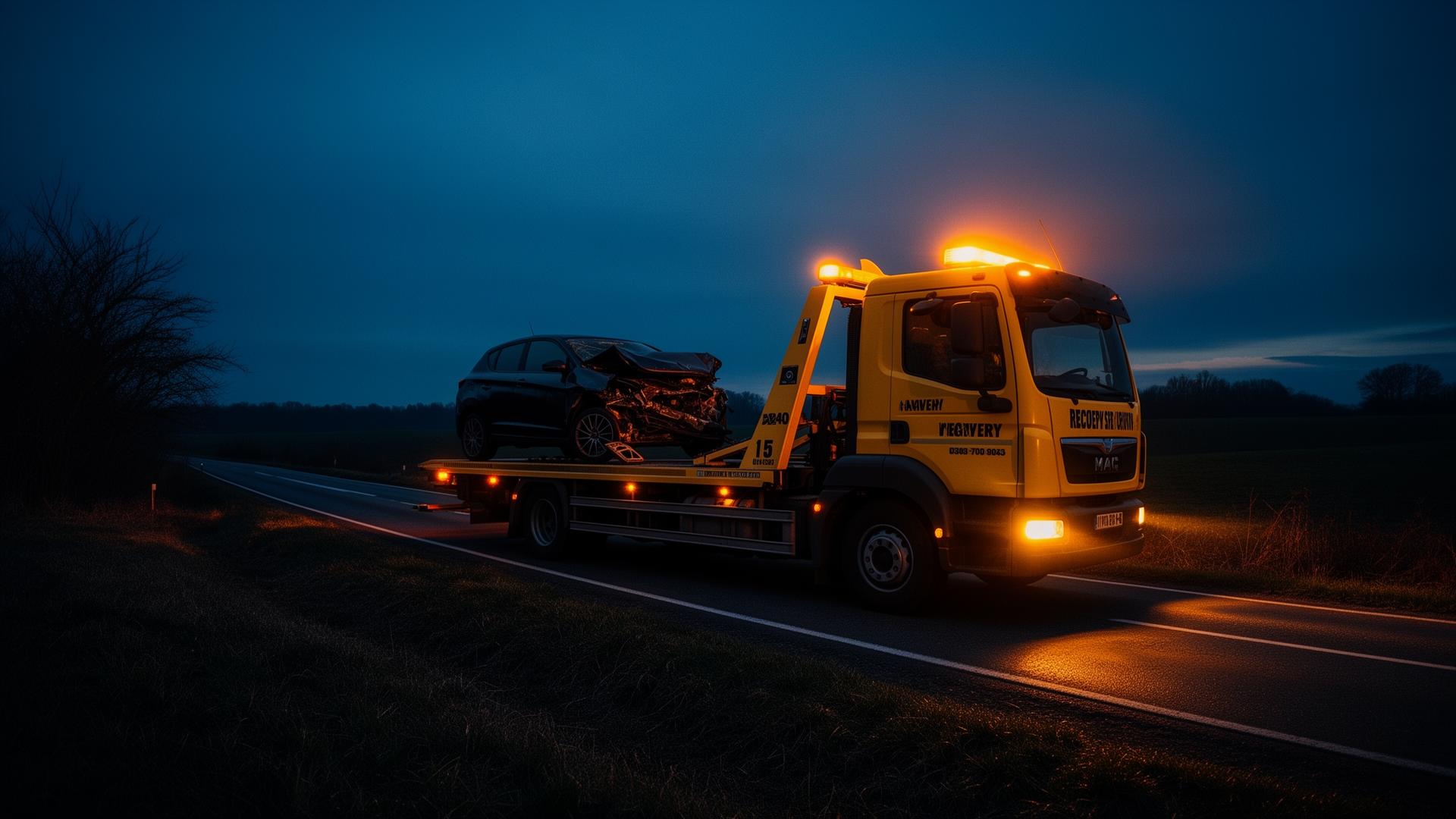
Electric and hybrid vehicles are recovered differently to combustion cars, and the difference is not optional. If the driven wheels rotate while the car is being moved, the motor can act as a generator and feed current back into a system that is not expecting it.
In practice that means one rule: EVs travel on a flatbed with all four wheels off the ground.
Why a flatbed is mandatory
Most manufacturers explicitly prohibit towing with any driven wheel on the road, including short distances. Some models have no true neutral at all once systems shut down.
Loading is done by winch if the car will not move under its own power, using the manufacturer's designated recovery points. Charge state does not prevent this — a completely flat traction battery does not stop a car being winched onto a bed.
How we plan the flatbed load
Tell us the make and model before the truck sets off, along with whether the car will power up, release its parking brake and roll. Those answers matter more to loading than the battery percentage on the screen. A vehicle that still moves can be positioned for the bed; if it cannot roll, we need to plan the winch or skates around its designated recovery points. Do not try to pull it along the road on a rope to reach a more convenient spot.
We use the flatbed approach described across this site's recovery guides: all four wheels travel clear of the road. That avoids relying on a tow mode or assuming a particular model can be moved with a driven axle turning. If access is narrow or the car is parked where a flatbed cannot approach, say so when you call. We can discuss the loading position before dispatch rather than finding out at the roadside.
Once safely loaded, tell us where you want the vehicle taken. The existing breakdown service offers transport to a chosen garage, home or another agreed destination; the EV guide also describes a working charger as an option after running out of charge. We agree the destination and quote before setting off. If there is collision damage, heat, smoke or a high-voltage warning, keep clear and call 999 first rather than treating it as a routine flat-battery job.
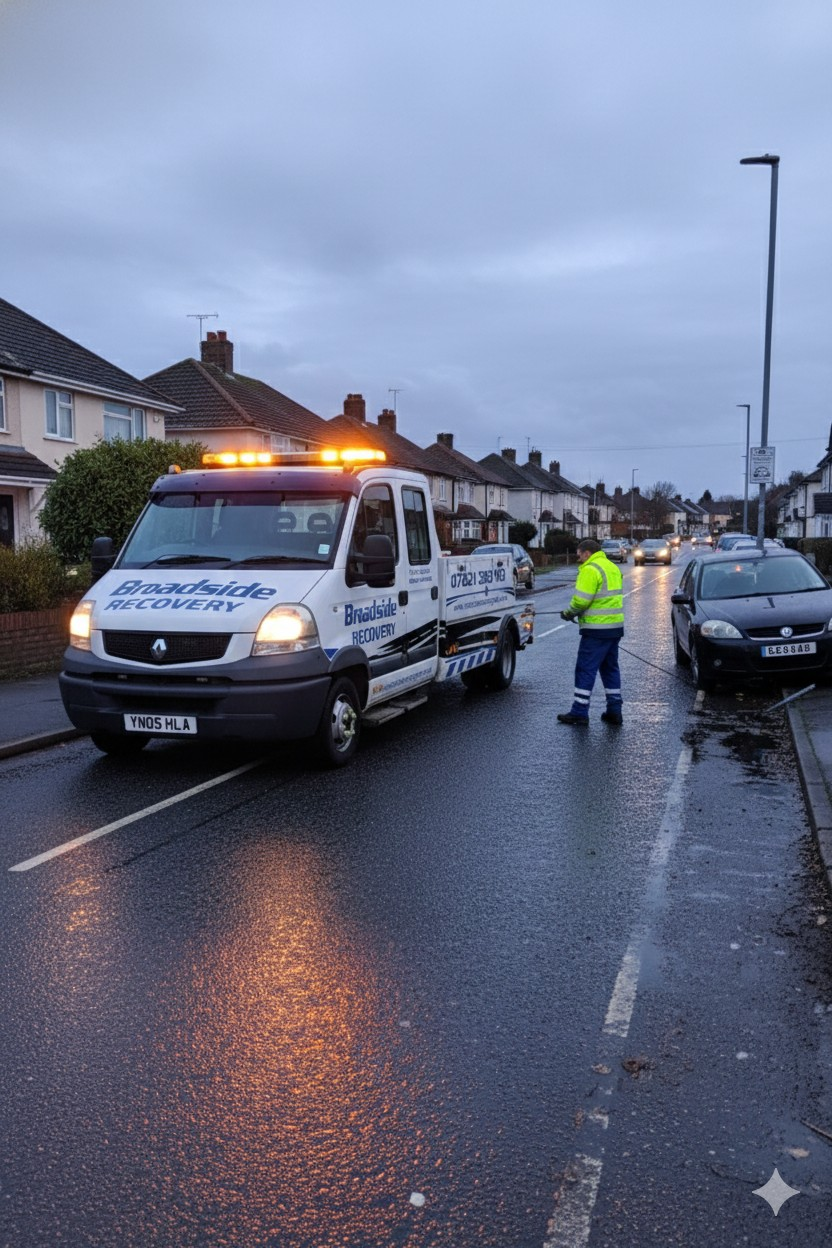
Running out of charge in Cornwall
Charger density falls off noticeably west of Truro and along the north coast, and holiday-season demand means a planned stop is sometimes occupied when you arrive. The result is a recovery type that barely existed a decade ago: a fully working car that simply cannot move.
There is no roadside equivalent of a fuel can for this. The vehicle is loaded and taken to a working charger or to your destination.
What we need to know on the call
- Make and model, and whether it is fully electric or a hybrid
- Whether the car can still be put into neutral and rolled
- Whether there is any damage, warning message about the high-voltage system, smell or heat
- Where it needs to go — home, a charger, or a franchise dealer
Damaged or overheating high-voltage batteries
If an EV has been in a collision, has a high-voltage system warning, or is producing heat, smell or smoke, treat it as a fire risk. Get everyone well clear, do not touch orange cabling, and call 999 first.
Damaged high-voltage packs are a specialist job with specific quarantine requirements. We will tell you honestly on the phone if a vehicle needs a specialist rather than a standard recovery.
Need this sorted today?
Flat battery, no charge, or a car that will not roll? We load EVs on the flatbed, day or night.
Frequently asked questions
Can my electric car be towed a short distance?
As a rule, no. Most manufacturers prohibit towing with the driven wheels on the ground at any distance, because the motor can generate current. It goes on a flatbed instead.
I have run out of charge. Can you take me to a charger?
Yes. The car is loaded onto the flatbed and taken to a working charge point or to your destination, whichever you prefer. Tell us which charger you are aiming for so we can check it suits the vehicle.
Can you load an EV that will not go into neutral?
Yes. Where the car cannot roll, it is winched or moved on skates using the manufacturer's designated recovery points, then secured on the bed.
What if my EV has been in a crash?
Call 999 first if there is any sign of heat, smoke or a high-voltage warning, and keep everyone well clear. A damaged high-voltage pack needs specialist handling, and we will tell you straight if that is what your vehicle needs.
Services covered in this guide
Related guides
Can I Still Drive It?
A safety-first decision for drivers facing smoke, overheating, tyre damage, warning lights or a car that no longer feels right.
ReadFlatbed vs Tow Truck
Why the wrong lift can damage a gearbox or bumper, and how to tell which method your vehicle actually needs before the truck arrives.
ReadFlat Battery: Jump Start or Recovery?
A jump start fixes a flat battery. It does not fix a charging fault — here is how to tell which you have.
ReadTowing Eyes & Recovery Points
Two minutes of checking before the truck arrives can prevent a bent subframe or a torn bumper.
Read