
If your car has stalled in deep water or you have found it sitting in a flood, do not try to start it. Water drawn into the engine can bend internal parts the moment it turns over, and water in the electrics can cause faults that appear days later. Get yourself safe, leave the ignition off and arrange for the vehicle to be moved on a flatbed rather than driven or towed on its wheels.
Cornwall sees its share of flash flooding — low lanes, fords, valley roads and coastal routes after heavy rain or a storm surge. This guide covers what to do in the first hour and afterwards.
If you are still in the car
Your safety comes first. Moving water only a short way up the wheels can shift a car, and it is very hard to judge depth at night. If the water is rising or flowing, leave the vehicle and get to higher ground if you can do so safely. If you or anyone else is in danger, call 999 immediately. The car can be dealt with later; people cannot be replaced.
Why you must not restart it
An engine needs air, not water. If water has been sucked through the air intake, the pistons try to compress something that will not compress, and that can bend connecting rods or crack components — often called hydrolock. Many engines that stalled in water would have been saved if nobody had tried the key again. Water also gets into sensors, connectors and control units; modern cars depend on those, and faults can surface long after the car looks dry.
Electric and hybrid cars carry high-voltage batteries. If one has been submerged, leave it alone, keep people away from it and tell whoever moves it exactly what happened.
Getting it moved safely
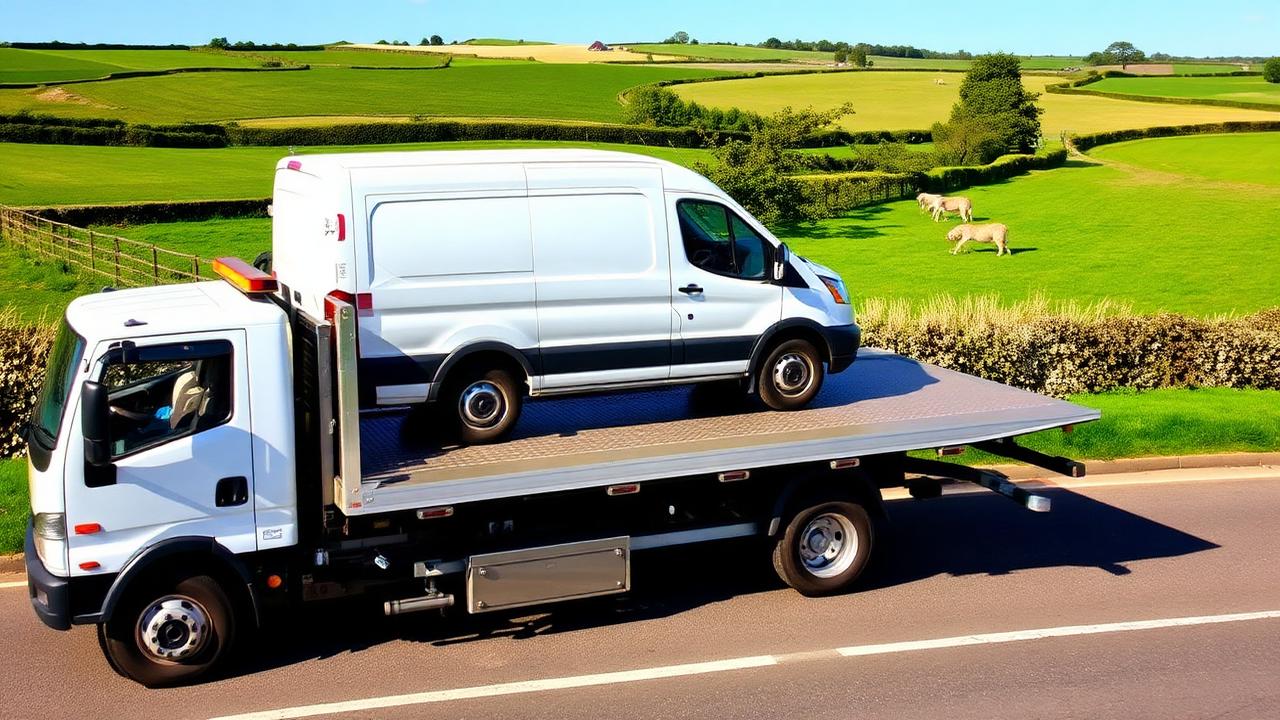
A flood-damaged car should travel with all four wheels off the road. We load on a flatbed as standard, which means no driven wheels turn and nothing in the drivetrain is forced round. If the car has settled in mud, is nose-down in a dip or will not roll, the driver can use the winch, skates or dollies to get it onto the bed. Electric and hybrid vehicles always go on the flatbed.
We will not wade a truck into moving water or somewhere unsafe. If the car is still in the flood, it may need to wait until levels drop or until emergency services have made the area safe.
What to tell the recovery driver
Those details help us bring the right equipment and choose a sensible destination.
- Roughly how deep the water was and whether the engine was running when it stopped.
- Whether anyone has tried to restart it since.
- If it is electric or hybrid, and any warning messages you saw.
- Where it is now, as precisely as possible — a what3words address or map pin is ideal.
- Where you want it to go: a garage that has agreed to inspect it, your home, or wherever your insurer has asked.
Insurance and next steps
Flood damage is usually a matter for the comprehensive part of a motor policy, so ring your insurer early and ask where they want the vehicle taken; some will want it at an approved repairer or an assessor's yard. Take photos of the water level on the car and the scene before it is moved if you can do so safely. Keep any receipts, including for recovery, in case they are needed for your claim.
If the car does end up at a garage, ask them to check the air intake, oil and electrics before anyone attempts a start. Oil that looks milky or a damp air filter are common signs water has got in.
Avoiding it next time
If you cannot see the road surface or the far edge of the water, do not drive in. Turn round and find another route, even if it is a long way round. If you must cross shallow standing water, go slowly and steadily in a low gear so you do not create a bow wave, then test your brakes gently afterwards. Local flood warnings and road closures are worth checking before you travel in heavy weather.
Need this sorted today?
Car stalled in floodwater? Leave the key alone, get somewhere safe and call. We will load it on the flatbed and agree the price before we set off.
Frequently asked questions
Can I try starting it once to see if it works?
Please do not. If water is in the engine, a single attempt to start it can cause serious internal damage. Leave the ignition off and have it moved.
Can you tow a flooded car on its wheels?
We load on a flatbed with all four wheels off the road, which avoids turning the drivetrain. That is the safest way to move a flood-damaged vehicle.
Will you recover a car that is still in the water?
Only when it is safe. If water is still flowing or rising, we may need to wait for levels to drop or for emergency services to clear the area.
Where should the car go?
Ask your insurer first. They may want it at an approved repairer or assessor. Otherwise a garage that has agreed to inspect it, or your home, are both options.
My electric car went through deep water. What should I do?
Do not try to drive it, keep people away from it and tell us it is electric when you call. EVs always go on the flatbed.
Services covered in this guide
Related guides
Storm and Flooded Road Driving
Cornwall's Atlantic storms bring standing water, flooded fords and occasional saltwater surges — knowing when to turn back matters more than pushing through.
ReadInsurance Claims After a Breakdown
A plain explanation of what standard car insurance typically covers, and does not cover, when a vehicle breaks down mechanically rather than being in a collision.
ReadWhen a Car Won't Roll: Skates, Dollies and Winching
Some vehicles cannot simply be pushed onto a truck. Here is how immovable cars are recovered without damage, and why the details you give on the phone matter.
ReadElectric Vehicle Recovery
EVs cannot be conventionally towed. Here is why, plus what to do if you run flat between chargers in Cornwall.
Read