
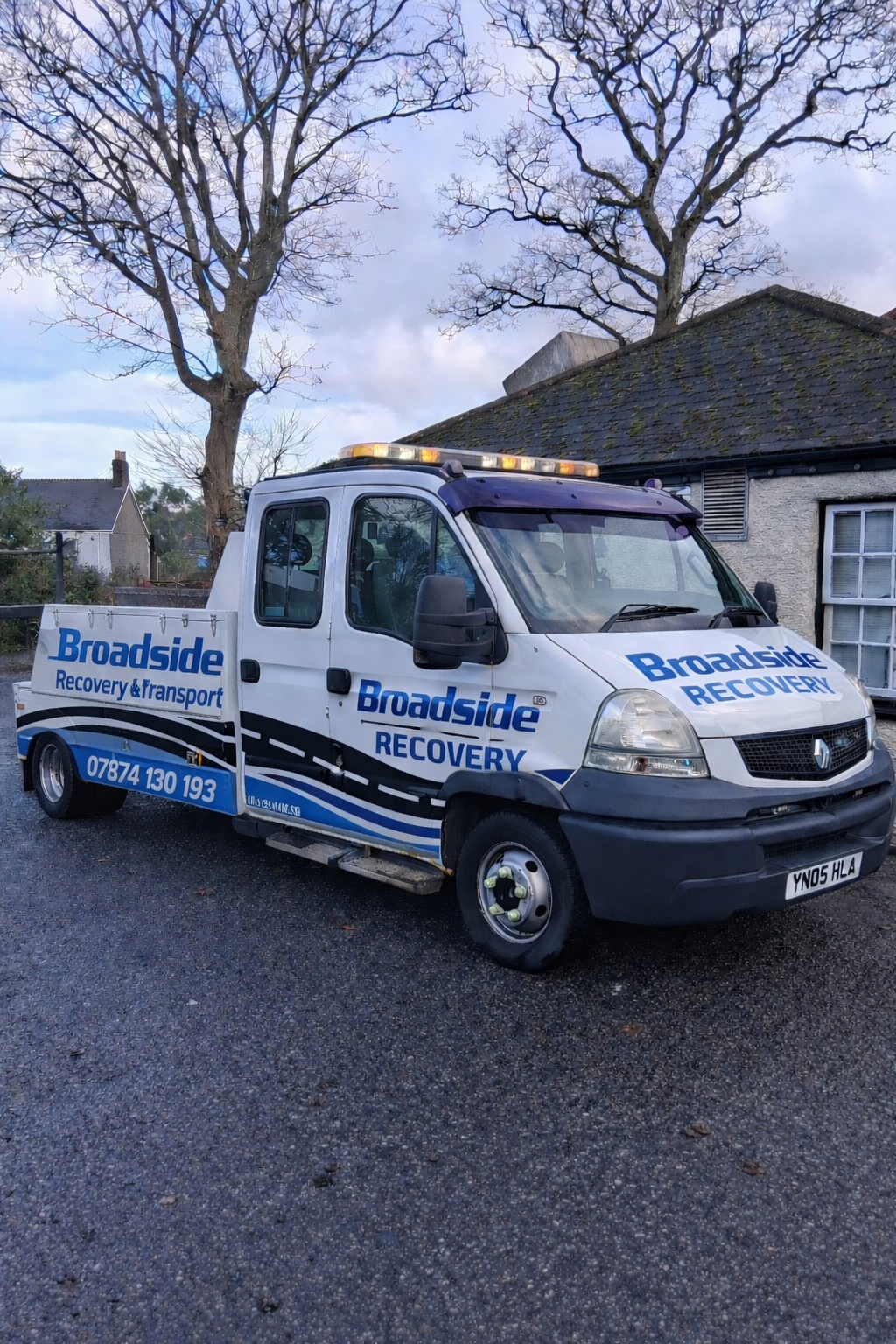
A motorcycle has no chassis to grab, no four wheels to spread a load across, and no protection if it topples during loading. Recovering a bike safely takes a different approach to recovering a car, and getting it wrong can turn a mechanical fault into cosmetic or structural damage that was not there before.
Cornwall's roads add their own challenges for bikes — fast open sections on the A30 and A38, tight coastal bends, and a genuine network of green lanes and byways used by trail and enduro riders. Each of those settings calls for slightly different handling once the recovery truck arrives.
This guide covers what actually happens during a motorcycle recovery, from strapping and wheel chocks to dropped bikes and getting a machine to a dealer for specialist work.
Why bikes need different handling
A car sits on four points of contact and will not fall over on its own. A motorcycle balances on two narrow contact patches and needs to be actively held upright at every stage — on the road, during loading, and for the whole journey on the truck.
That means a competent motorcycle recovery is as much about the securing method as it is about the truck itself. A bike loaded without proper chocking and strapping can shift, lean, or drop during transport, even over a short distance.
Straps and wheel chocks
A wheel chock holds the front wheel upright and stops the bike rolling or tipping while it is being strapped down, and it is the difference between a secure load and one relying purely on the rider's balance skills applied to a stationary bike.
Straps should pull down and outward at an angle, not straight down, and should never be tightened onto delicate plastics, brake or clutch levers, or exhaust systems where they can crush or crack components.
- Front wheel chock keeps the bike upright without relying on the side stand alone
- Straps anchored to the frame or fork legs, not to bodywork or levers
- Soft loop protectors on handlebars and fork legs where straps make contact
- Rear tie-downs at an angle to control the back end without over-compressing the suspension
- Side stand and centre stand checked before the bike is left resting on either
Dropped bikes and fairing damage
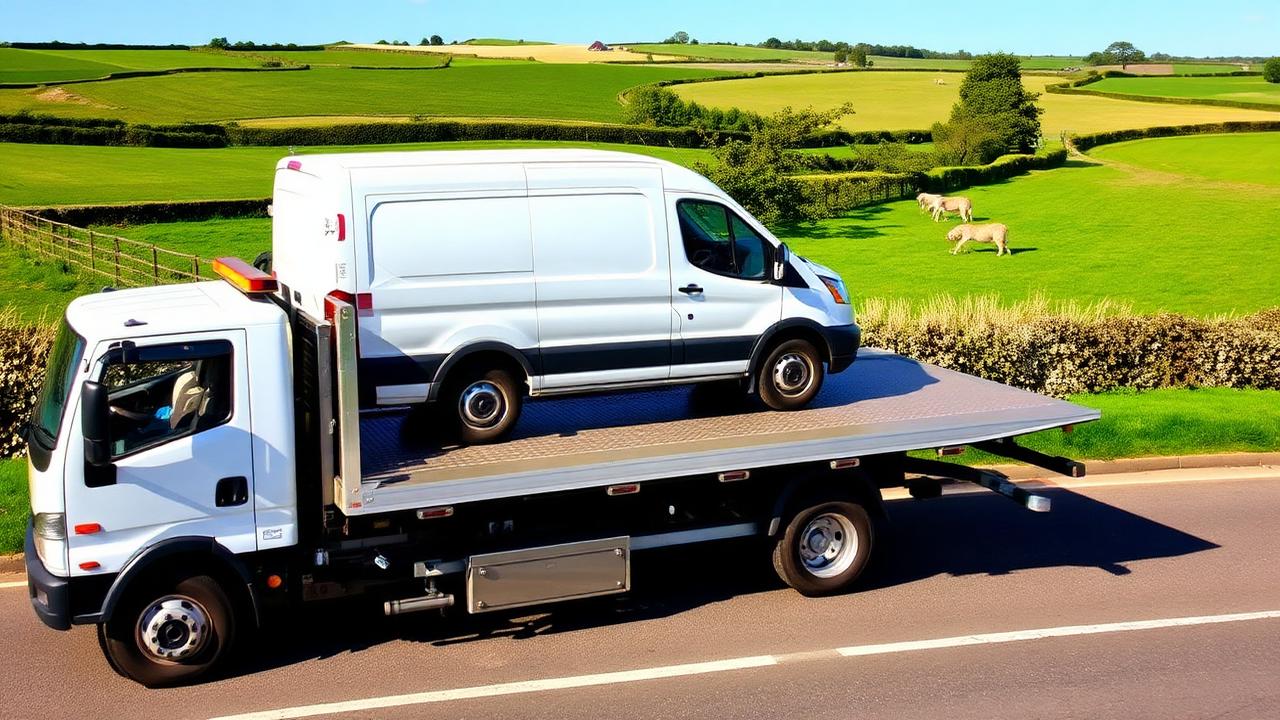
A bike that has come off, low-sided, or simply toppled over at a standstill often has cosmetic and sometimes structural damage before recovery even starts — cracked fairings, bent levers, a scraped exhaust or a twisted handlebar. Recovery should not add to that list.
Fairings in particular are brittle and expensive, and rough handling during lifting or strapping can turn a repairable crack into a replacement panel. Tell us on the call if the bike has already been dropped so the right care is taken loading it, and so any pre-existing damage is noted rather than assumed to have happened during transport.
Off-road and green lane recoveries
Trail and enduro riders sometimes come off in genuinely difficult terrain — deep mud, a steep bank, or well off the beaten track down a green lane. These recoveries need manual handling and, occasionally, a winch pull to firmer ground before the bike can even reach a truck.
If your bike is down off a road or track, describe the terrain as precisely as you can — surface, gradient, how far it is from vehicle access — so we know whether extra kit or extra time should be planned in.
- Describe the surface: mud, grass, gravel, rock or sand
- Note the gradient and whether the bike can be walked to firmer ground
- Mention any gates, tracks or access restrictions along the route in
- Let us know if the bike is upright, on its side, or partly buried
Moving a bike to a dealer or specialist
Not every bike goes home after a breakdown. Warranty work, a specific make dealer, or a specialist repairer sometimes means a longer transport leg rather than a local roadside recovery. This is straightforward to arrange as a booked job rather than an emergency call-out if the bike is safely off the road.
Give us the dealer or workshop address, and any access notes for their premises, when you book — some dealer forecourts have restricted delivery hours or specific unloading areas.
What to have ready when you call
A quick, accurate call means the right vehicle and equipment are sent the first time.
- Make and model of the bike, and roughly how heavy it is
- Whether it is upright, dropped, or off-road
- Whether it will roll and steer, or is completely seized
- Exact location, including surface and access
- Destination — home, garage or dealer
Need this sorted today?
Bike down or broken down? Call now and describe the situation — we will bring the right kit.
Frequently asked questions
Will strapping damage my bike?
Not if done correctly. Straps should attach to the frame or fork legs with soft protectors at contact points, never directly to plastics, levers or the exhaust, so there should be no marking or cracking from a proper tie-down.
My bike has already been dropped — does that matter for recovery?
Yes, tell us. Existing damage such as a cracked fairing or bent lever needs extra care during loading, and noting it beforehand avoids any confusion about when the damage occurred.
Can you recover a bike from a green lane or off-road location?
In many cases yes, though very difficult terrain may need the bike walked or winched to a point a truck can reach. Describe the ground and access when you call so we can plan properly.
Do you use a wheel chock for every bike?
Yes, a chock is standard for securing the front wheel during transport. It keeps the bike upright and stable without relying purely on straps or the side stand.
Can a motorcycle and a car be recovered on the same call-out?
If they are at the same location, often yes, though this depends on truck capacity and the specific vehicles involved. Ask when you call and we will confirm what is possible.
Is my bike safe travelling on an open flatbed in bad weather?
Once correctly chocked and strapped, a bike travels securely in most weather. If conditions are severe we will discuss the safest option with you before setting off.
Services covered in this guide
Related guides
Towing Eyes & Recovery Points
Two minutes of checking before the truck arrives can prevent a bent subframe or a torn bumper.
ReadRecovery in Narrow Cornish Lanes
Cornwall's lanes are the county's defining recovery challenge. Here is how a truck actually gets to you.
Read4x4 and SUV Recovery
Why four-wheel-drive vehicles need particular handling during recovery, and what changes when the vehicle is stuck on a beach, field or verge rather than a road.
Read