
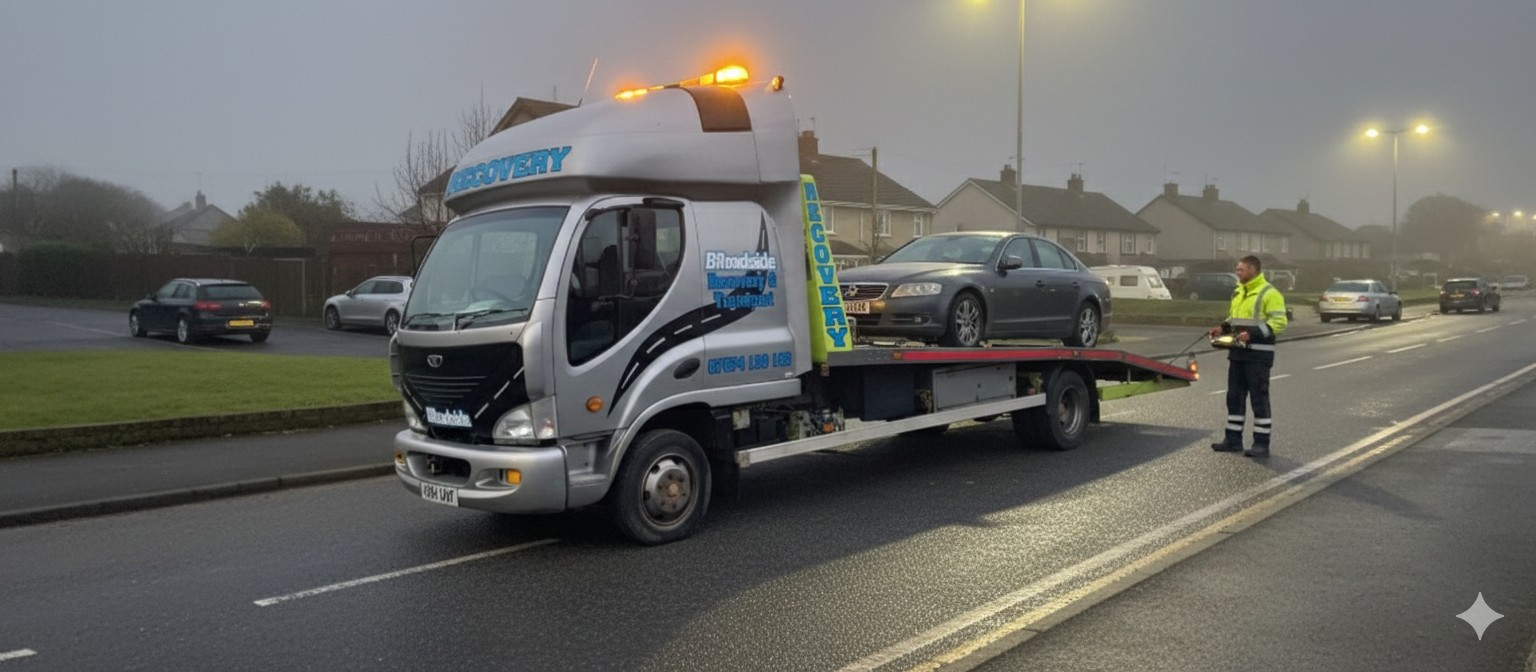
To recover a non-running car, it is winched onto a flatbed rather than driven. If the wheels still roll, that is straightforward; if the brakes are seized, the tyres are flat or the steering is locked, skates and a straight pull are used. Pushing it onto a trailer yourself is rarely safe.
"Non-runner" covers everything from a car with a dead battery to a shell that has not moved in a decade. They are loaded very differently, and the details decide what equipment turns up.
This guide explains what matters, so a project car, a garage transfer or a scrapyard move happens in one visit.
The four questions that matter
Whether a vehicle runs is almost irrelevant. What matters is whether it moves:
- Does it roll? Seized brakes or a locked drivetrain mean skates or dollies.
- Does it steer? A locked column changes how it can be pulled onto the bed.
- Does it brake? Relevant for controlling it on and off the bed and on a slope.
- Does it have four inflated tyres? Flats and missing wheels both need planning.
Where it is sitting
A car that has been static a long time is often in the least convenient place available: the back of a garden, a shed, a barn, or up against a wall on a gravel drive. Winch line length, the pull angle and whether the truck can reverse in all become the real constraints.
Photos are genuinely useful here. A couple of pictures of the vehicle and the approach saves a wasted visit.
Long-static vehicles
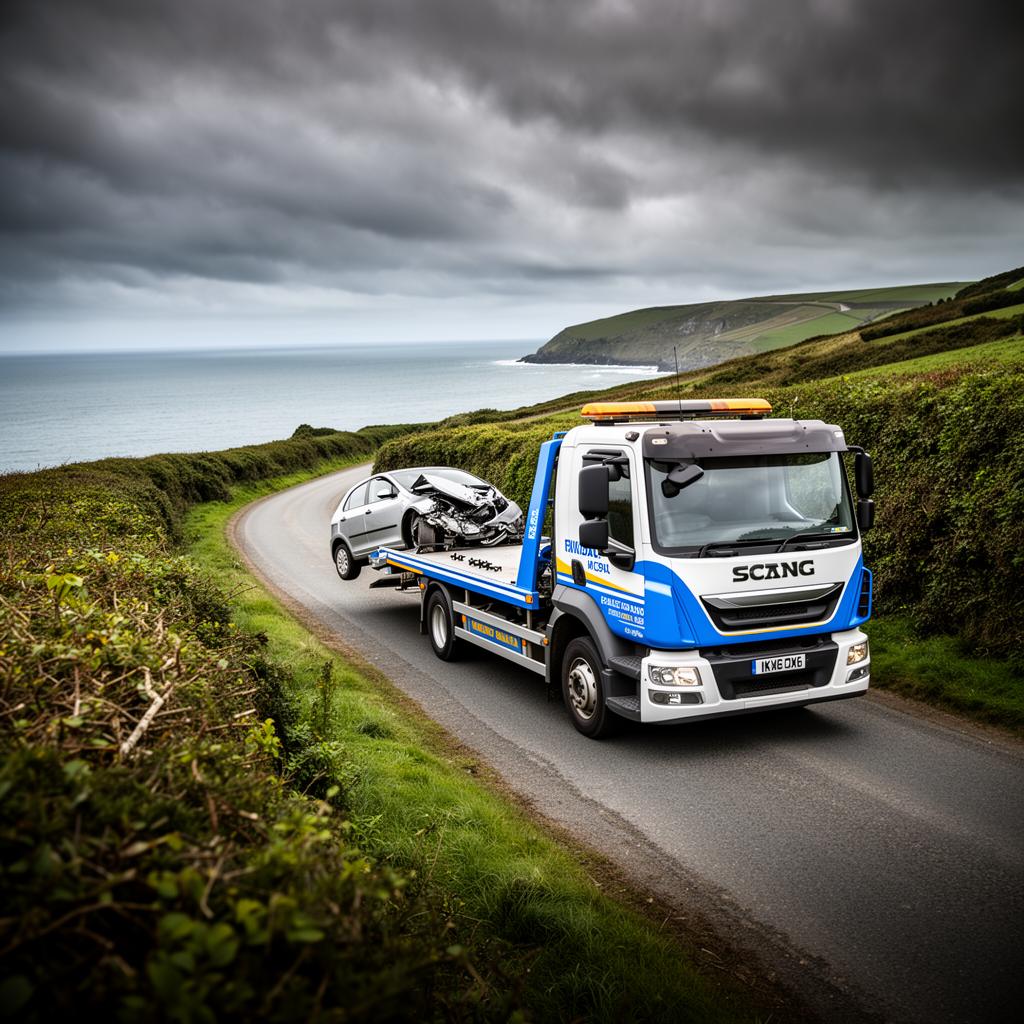
Vehicles left standing for years often have perished tyres that deflate the moment they are moved, brake discs bonded to pads, and corroded jacking points. None of that prevents recovery, but all of it adds time.
If a vehicle has sunk into soft ground or grass has grown through it, say so — the extraction is the job.
Paperwork and authority
You need the right to move the vehicle. For a purchase, the bill of sale or V5 is enough; for a garage transfer, the garage's agreement; for a vehicle on someone else's land, the landowner's permission.
We will not remove a vehicle where the authority to do so is unclear.
Four questions that decide how it is moved
Do the wheels turn? Does the steering move? Is there a key, even one that only unlocks the column? Are the tyres holding air? Honest answers to those four let us bring the right kit and quote accurately.
Tell us where it is sitting too: a garage with a low doorway, a garden behind a gate, or a verge where it has sunk in. A photo of the car and its surroundings makes the quote far more reliable.
Related pages
Need this sorted today?
Send a photo of the vehicle and where it is sitting and we will confirm the method and price.
Frequently asked questions
My car has seized brakes and will not roll. Can it still be moved?
Yes. Skates go under the locked wheels, or dollies are used, and the vehicle is then winched onto the bed. Mention it on the call so the equipment is on board.
It has no keys and the steering is locked. Is that a problem?
It is workable, but it changes the method — a vehicle that cannot be steered has to be skated into line rather than pulled straight on. Tell us in advance.
The car has flat or missing tyres. What then?
Flat tyres are usually fine on a short winch, though they can shred. Missing wheels mean skates or dollies. Either way, tell us how many wheels are on the car and what condition they are in.
Can you get to a car at the bottom of a garden?
Often, depending on winch reach, the ground and what is in the way. Send photos of the vehicle and the route out and we will tell you honestly before booking.
Can I tow a non-running car with a rope?
We would not advise it. With no engine, power steering and brake assistance are gone, which makes a rope tow hard to control. Winching onto a flatbed is the safer way to move it.
Do you move non-runners for planned jobs, not just breakdowns?
Yes. Project cars, failed MOTs and vehicles with no keys can be booked for transport as well.
Services covered in this guide
Related guides
Buying a Car Remotely
The practical checklist for getting an online, auction or distance purchase collected and delivered without drama.
ReadClassic Car Transport
Low ground clearance, fragile chrome and original chassis points — what changes when the car is irreplaceable.
ReadTowing Eyes & Recovery Points
Two minutes of checking before the truck arrives can prevent a bent subframe or a torn bumper.
Read