
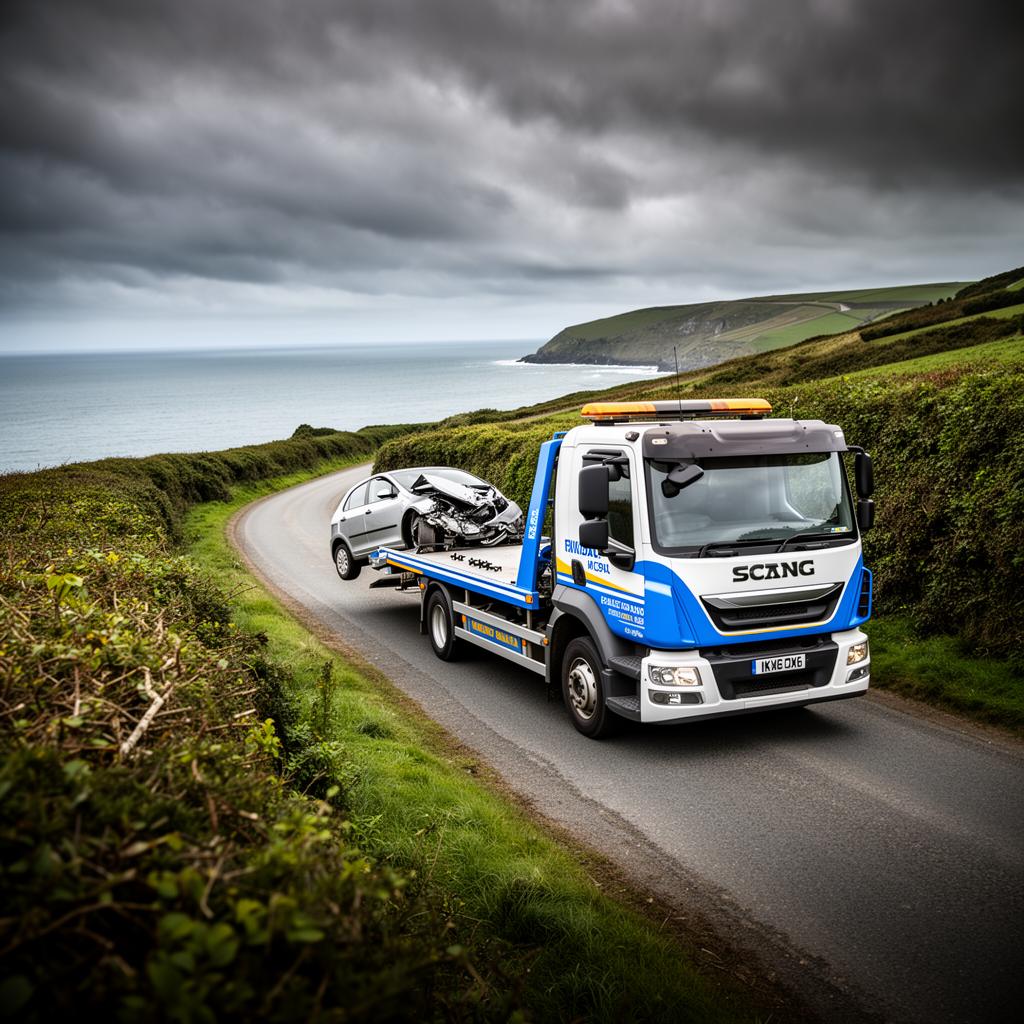
A van breakdown rarely affects just one person. Behind most vans on Cornwall's roads is a tradesperson, a delivery round, a house move or a business that stops the moment the vehicle does. Recovery for vans has to account for that pressure as much as the mechanical fault itself.
Vans also come in a wider range of shapes and weights than almost any other vehicle category — from a small car-derived van no heavier than a hatchback, up to a long-wheelbase Sprinter or Luton body pushing close to 3.5 tons unladen, before you add a load. The right truck and the right method depend on knowing which of those you are dealing with.
This guide covers the practical differences between van sizes, what a load does to a recovery, and what to have ready so a van recovery goes smoothly rather than becoming a second problem on top of the breakdown.
Not all vans are the same job
A car-derived van such as a small panel van built on a hatchback platform behaves like a car for recovery purposes — it fits standard ramps, loads easily and rarely needs anything beyond a normal flatbed run.
Step up to a medium panel van, and then to a long-wheelbase high-roof Sprinter, Transit or Luton, and both the weight and the physical dimensions change what is needed. Height matters as much as weight: a high-top van under a low bridge, or too tall for a standard low-loader ramp angle, needs planning before the truck sets off.
- Car-derived vans — treated much like a car, standard flatbed recovery
- Medium panel vans (Transit, Transporter class) — usually within 3.5 ton recovery capability
- Long-wheelbase and high-roof vans — check height and ramp clearance before loading
- Luton box vans — tall and top-heavy; loading angle and strapping points need care
- Refrigerated and fitted-out vans — extra weight from equipment, not just the bodywork
- Minibuses and crew vans — passenger safety and seating changes the on-scene priorities
Loaded vans and cargo
A breakdown rarely waits for a convenient moment, which means recovery often has to deal with a van that is still full — tools, stock, parcels, or a part-finished job load. That cargo changes both the weight the truck is lifting and how it needs to be secured for the journey.
Tell us if the van is loaded and roughly how heavy that load is when you call. It affects which truck is sent and whether the load needs to be secured separately before the vehicle is winched or driven on.
- Declare an approximate load weight, not just the van's own weight
- Loose or unsecured cargo can shift during winching — let the driver know what is inside
- Perishable or time-sensitive loads may need a transfer plan agreed on the phone
- Tools and stock left inside should be locked and out of sight where possible
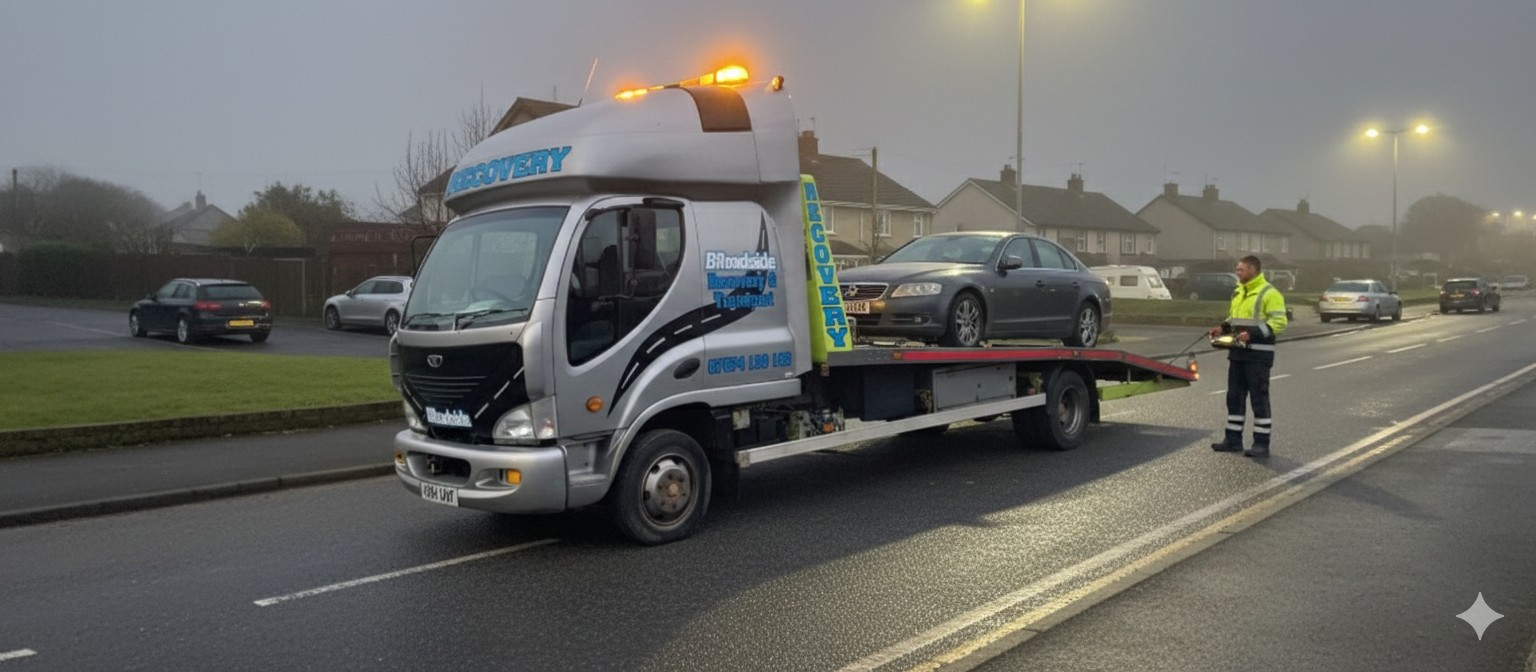
3.5 ton vs 7.5 ton equipment
Most panel vans, even large ones, fall under 3.5 tons gross and can be handled on standard flatbed recovery equipment. Once you get into larger box vans, dual-rear-wheel chassis conversions, or a van that is loaded close to its plated weight, the job moves into 7.5 ton recovery territory.
Sending the wrong size truck wastes time — either it cannot lift the vehicle safely, or a smaller truck arrives and has to be swapped for a bigger one. Giving the make, model and body type on the initial call avoids that.
Downtime matters for tradespeople
For a self-employed tradesperson or a small delivery business, a van off the road is lost income, not just an inconvenience. Where possible we prioritise getting the vehicle moving again or transported to a garage quickly, and we will tell you honestly if a same-day slot is not realistic rather than leave you guessing.
If the van cannot be repaired quickly, moving it to a garage that has parts and capacity — rather than the nearest one — can save more time overall than a same-day tow to somewhere with a backlog.
Keys, tools and security
Vans often carry expensive tools, stock or personal belongings, and a breakdown at the roadside or on a driveway is exactly when opportunist theft happens. Securing the vehicle and its contents is part of a sensible recovery, not an afterthought.
- Lock the van and keep keys with you rather than leaving them in the ignition
- Note serial numbers of high-value tools in case anything needs reporting later
- If the van has to be left overnight before transport, tell us so we can advise on a safer holding point
- Slam locks and deadlocks should be engaged even for a short wait at the roadside
What to tell us when you call
The quicker we understand the vehicle and situation, the faster the right truck is on its way. A short, accurate call beats a long, vague one.
- Van make, model and body type (panel, Luton, crew, dropside)
- Whether it is loaded and roughly how heavy the load is
- Whether it rolls, steers and brakes
- Exact location and access — yard, road, driveway or lane
- Where it needs to go — garage, depot or home
Need this sorted today?
Van off the road and costing you the day? Call now and we will get the right truck moving.
Frequently asked questions
Can you recover a van that is fully loaded?
Yes, but tell us so on the call. A loaded van weighs more and may need the load secured before it is winched or driven onto the truck, which affects the equipment we bring.
Do all vans need the 7.5 ton truck?
No. Most panel vans, including long-wheelbase ones, fall under 3.5 tons unladen and can be moved on standard flatbed equipment. It is mainly large box vans and heavily loaded vehicles that need the bigger truck.
My van won't start on a customer's driveway — can you collect it discreetly?
We can. Let us know the situation and we will keep the collection straightforward and low-key, without unnecessary disruption at the address.
Is my equipment insured during recovery?
Recovery covers the vehicle itself; contents are your responsibility, so remove or secure valuable tools and stock where practical before the truck arrives.
Can you take my van straight to my usual garage?
Yes, provided it is within reasonable distance and the garage can accept it. Tell us the address when you call and we will confirm timing.
What if my van is too tall for a standard ramp angle?
Tell us the height and body type in advance. High-roof and Luton vans sometimes need a shallower loading angle or extended ramps, which we can plan for before the truck sets off.
Services covered in this guide
Related guides
3.5 Ton vs 7.5 Ton Recovery
One number on your V5 decides which truck comes. Here is where to find it and why it matters.
ReadMoving a Non-Runner
Seized, keyless, wheel-less or simply dead — how each type of non-runner is actually loaded.
ReadFleet & Trade Van Breakdown Planning
For a trades business, the van failing is a lost day. A small amount of preparation cuts that to hours.
Read