
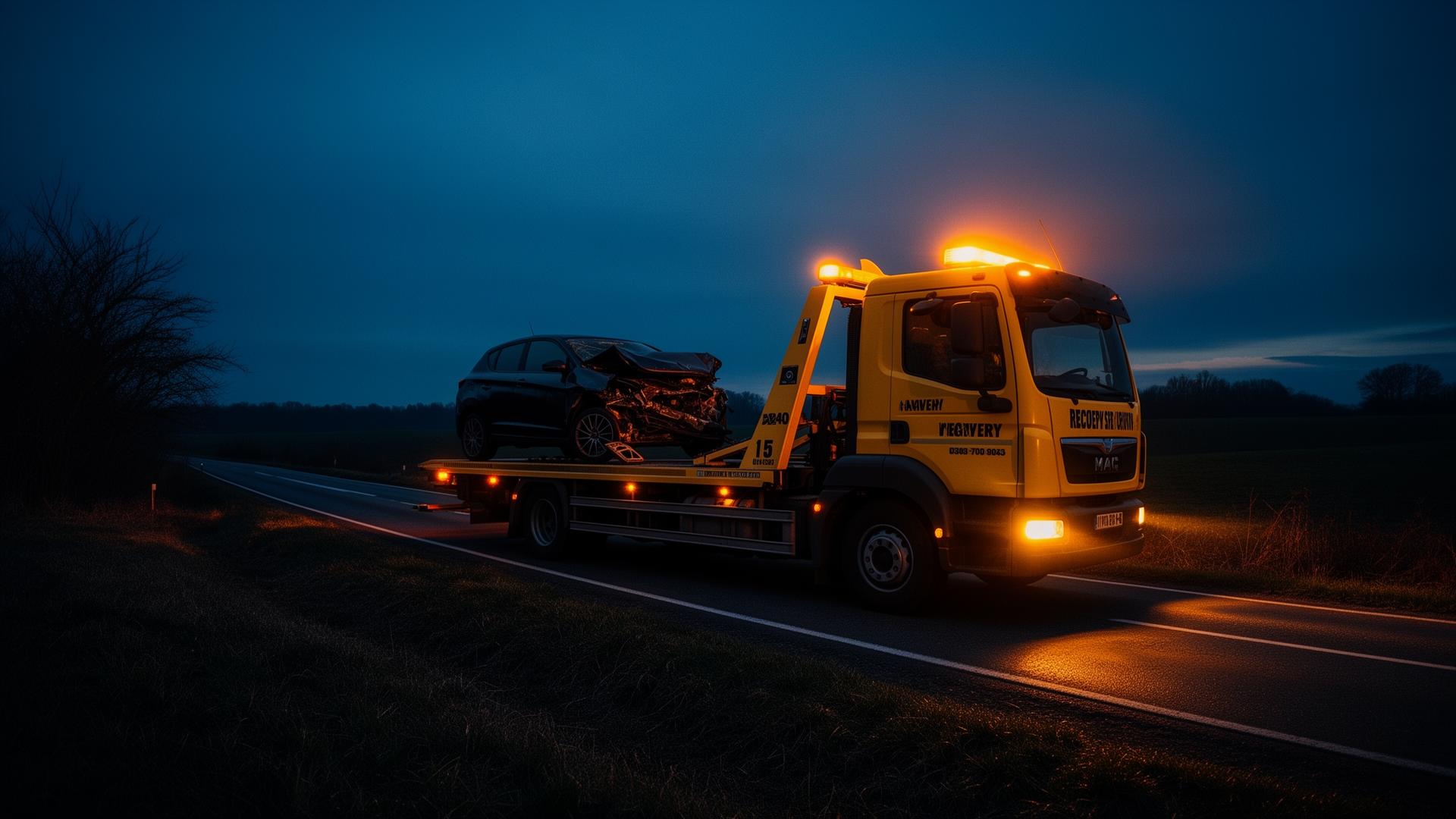
The honest answer is that it depends on three things: how far the nearest truck is from you, how long your vehicle takes to load safely, and how far it is going afterwards. Anyone who quotes a fixed time without asking where you are and what you drive is guessing. When you ring us we work it out from your actual location and tell you on the call, together with the price.
This guide breaks the job into those three stages so you know what to expect, what slows things down and what you can do from the verge to speed it up.
Stage one: getting a truck to you
The biggest factor is distance. Broadside Recovery is based at Pool, between Camborne and Redruth, and covers the whole of Cornwall 24 hours a day. A breakdown a few miles from the base is a very different trip from one on the far side of Bodmin Moor or up near the Devon border. Cornwall's roads add their own variables: the A30 moves quickly when it is clear, but single-track lanes, summer holiday traffic and roadworks all stretch a journey that looks short on a map.
The second factor is what the truck is already doing. Recovery is a live, around-the-clock job, so if a vehicle is mid-recovery elsewhere the dispatcher has to decide the fastest way to reach you. That is why we give you a realistic expectation on the phone rather than a promise printed on a website.
Stage two: loading the vehicle
Once the driver arrives, loading a car that rolls and steers onto a flatbed is usually quick. It takes longer when the vehicle is awkward: seized brakes, locked steering, no keys, flat tyres, low ground clearance, a car nosed into a ditch or a van carrying a heavy load. In those cases the driver may need skates, dollies or the winch, and that care is worth the extra minutes because it stops further damage.
If the fault looks simple — a flat battery, a flat tyre with a usable spare, a fuel problem — the driver may be able to get you moving at the roadside instead, which can end the job sooner than a full recovery.
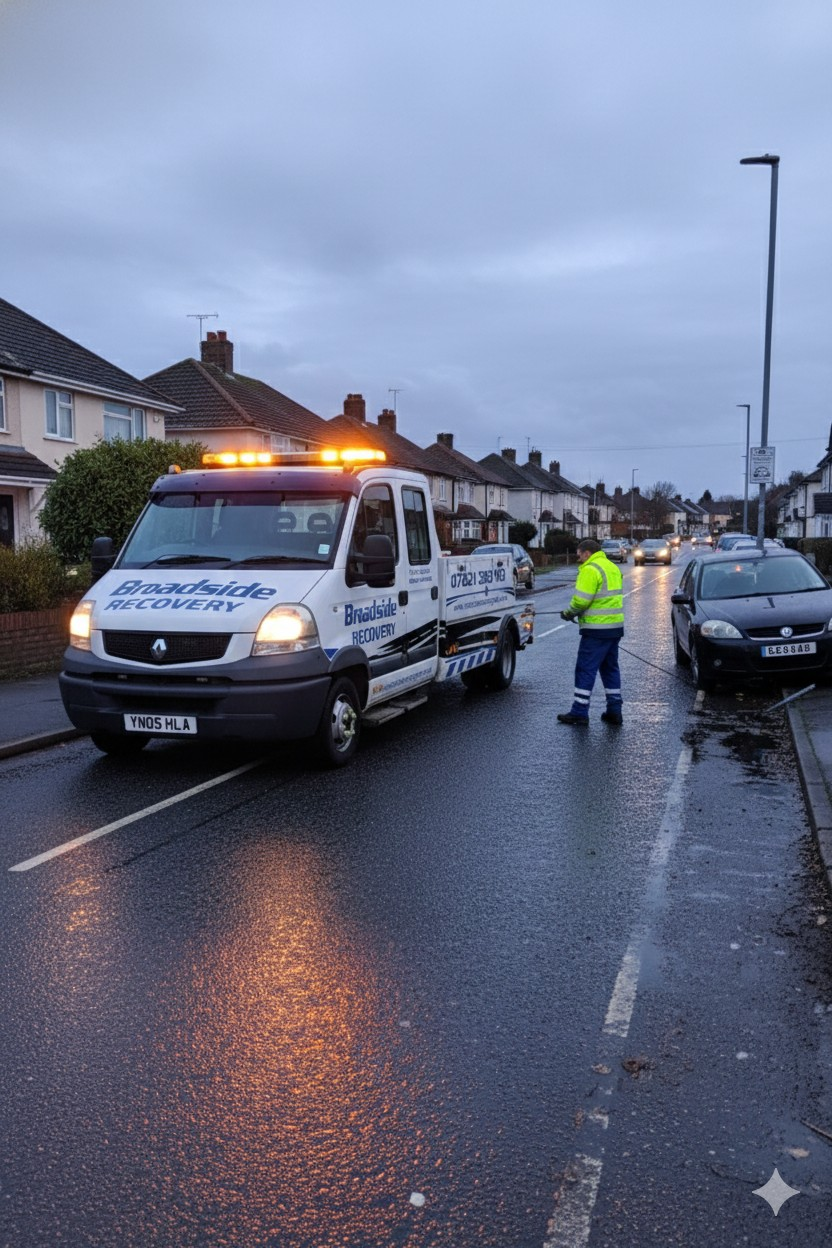
Stage three: the drive to the drop-off
Passengers travel with the vehicle in the cab, so this stage is simply a drive. A garage in the next town is a short hop; home on the other side of the county, or a long-distance delivery, takes as long as the road takes. Late at night many garages are shut, so home or your holiday address is often the practical choice, with a second, booked move to the garage the next day.
What makes recovery take longer
Most delays come from a handful of predictable causes.
- A vague location. "Somewhere near Bodmin" costs time. A what3words address or a dropped pin removes the guesswork.
- Missing vehicle details. A lowered car, a heavy van or an electric vehicle needs the right approach; telling us on the call means the right kit arrives first time.
- Hard-to-reach spots. Height-limited car parks, narrow lanes and steep driveways may need extra manoeuvring or winching.
- Peak traffic. Summer weekends and bank holidays on the A30 and around the resorts slow everyone down, including recovery trucks.
- Unsafe positions. If the vehicle is in a live lane or an accident scene, police or highways staff may need to make the area safe before loading.
How to shorten the wait
Ring as soon as you are safe rather than trying repeated fixes. Have the make, model and registration ready, say what happened when it stopped, and give the most precise location you can. Tell us where you want the vehicle to go and check the garage can accept it. Keep your phone switched on and charged so the driver can reach you if they need directions for the last few hundred metres.
Stay somewhere safe while you wait — behind a barrier on a fast road, well back from the carriageway, never standing between the vehicle and traffic. If you feel unsafe or anyone is hurt, call 999 first.
A booked job is different
If the vehicle is already safe — on a driveway, in a car park, or a non-runner that has been sitting for weeks — it does not need an emergency call-out. A booked transport can be planned around the garage's opening hours, which often suits everyone better than a same-night move.
Need this sorted today?
Stuck and want a realistic time? Call with your exact location and vehicle, and we will tell you when to expect us and the price before we set off.
Frequently asked questions
Can you tell me how long you will be before I agree?
Yes. When you call we work it out from your location and what we are already doing, and we tell you on the call along with the agreed price.
Does the time of day change how long it takes?
It can. Traffic is lighter late at night, but garages are closed, so the drop-off may be home instead. Summer daytime traffic on the A30 and around the resorts is usually the slowest.
Why does loading sometimes take longer?
Vehicles that will not roll or steer, have no keys, sit very low or carry a heavy load may need skates, dollies or winching. Taking that care avoids extra damage.
Can I travel with my car?
Yes. Passengers travel with the vehicle in the cab of the truck.
Is it quicker if you can fix it at the roadside?
Often, yes. Flat batteries, tyres and some fuel or electrical faults can be sorted on the spot where it is safe to work, which can finish the job sooner.
Services covered in this guide
Related guides
What Happens When You Call
The full call-out sequence from first ring to drop-off, including exactly what to do while you wait at the roadside.
ReadBroken Down on the A30
The A30 is the county's spine and its fastest road. Here is the safe sequence if you stop on it.
ReadRecovery in Narrow Cornish Lanes
Cornwall's lanes are the county's defining recovery challenge. Here is how a truck actually gets to you.
ReadHow to Choose a Recovery Service
The practical checks worth doing before a breakdown happens, so the number you dial is one you can trust rather than the first search result.
Read