
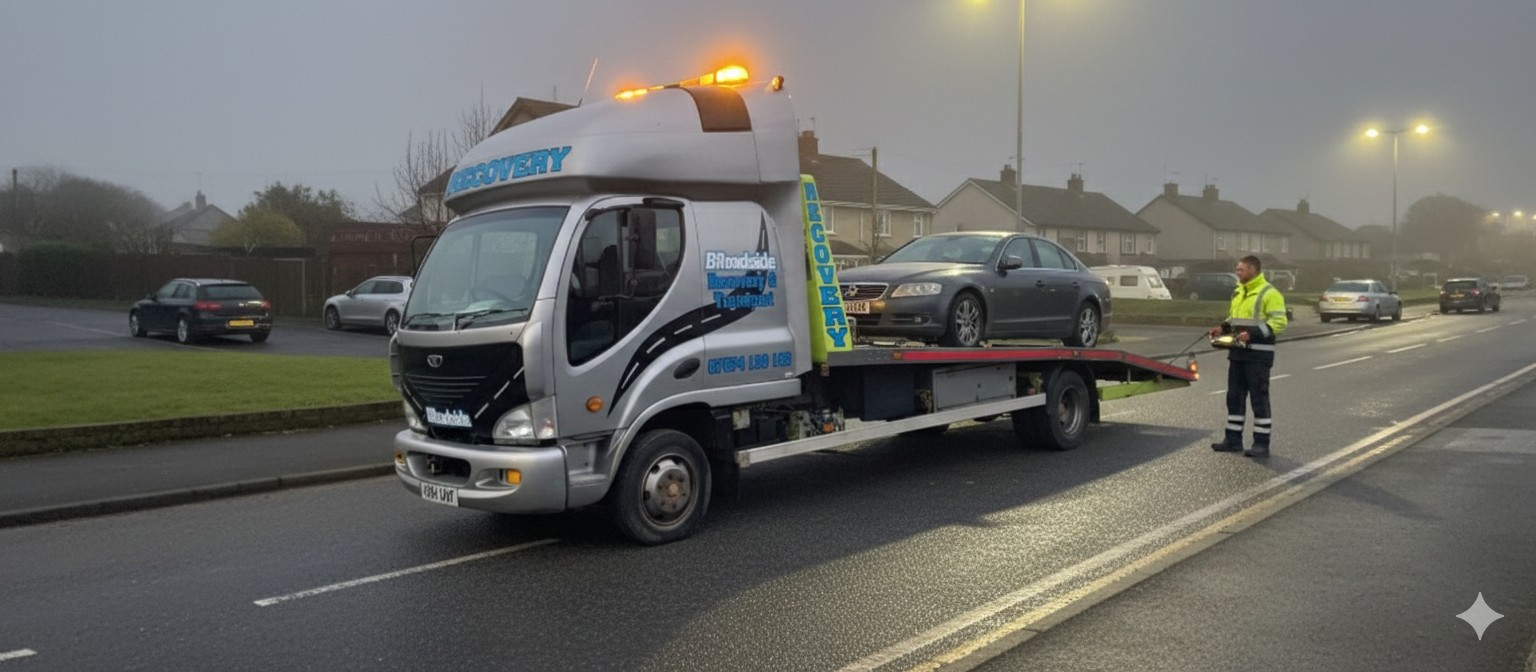
A car that will not roll can still be recovered. Wheel skates or dollies go under the locked wheels so the vehicle can be moved on them, and a winch then pulls it onto the flatbed using a designated recovery point. It takes longer than loading a car that rolls freely, which is why it helps to say so when you first call.
The situations vary — a handbrake that has seized after months of standing, an automatic stuck in park with a flat battery, an electric car that will not go into neutral, a keyless car with locked steering, or a vehicle that has lost a wheel. The equipment and method change with each.
Why a car stops rolling
The most common causes we are told about are:
- Brakes or handbrake seized after the car has stood for a long time, especially outdoors in damp coastal air.
- Automatic gearbox locked in park, often because the battery is flat and the selector cannot be released.
- Steering lock engaged with no keys available, or a keyless car that will not power up.
- Electric vehicles that cannot be put into neutral.
- Flat, damaged or missing tyres and wheels.
- Accident damage that has pushed a wheel out of line.
What skates and dollies do
A wheel skate is a small wheeled platform that sits under a tyre. With skates under the locked wheels, the car rides on the skates rather than its own wheels, so it can be moved even though nothing turns. Dollies do a similar job and are used where a wheel is missing or the tyre cannot support the car.
Once the vehicle can move, it is winched onto the flatbed. Winching uses the manufacturer's designated recovery point or a proper chassis point, never a bumper bar or suspension arm, which are not designed for that load.
Where access makes it harder
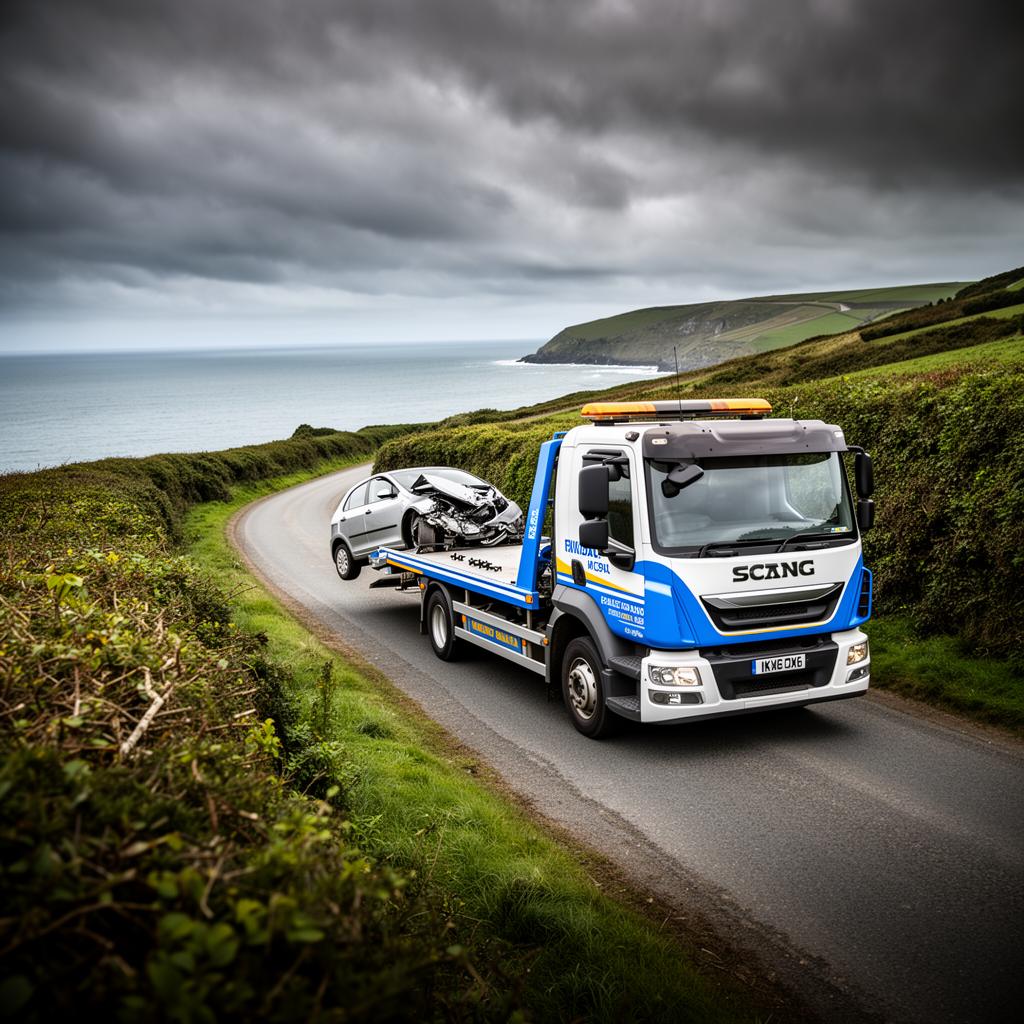
An immovable car on a level drive is straightforward. The same car at the back of a garden, inside a garage, in a barn or up against a wall on gravel takes more planning: winch reach, the angle of the pull and whether the truck can reverse close enough all matter. Photos of the car and the route out are genuinely useful here.
In a car park, the concern is often height limits and tight bays. Tell us the car park by name and which level the car is on.
Things not to try
It is tempting to force the issue. Please don't:
- Do not drag a car with locked wheels using a rope or another vehicle — it can damage the tyres, drivetrain and road surface.
- Do not tie a winch or strap to a bumper, towbar ball or suspension part.
- Do not try to force an automatic out of park without following the handbook's release procedure.
- Do not attempt to move an electric vehicle with its wheels turning on the road.
What to tell us on the phone
When you ring 07874 130193, say which wheels are locked (front, rear or all), whether you have the keys, whether the battery is flat, whether it is an automatic, manual or electric, and exactly where it is sitting. That lets us bring the right equipment the first time instead of discovering the problem on arrival.
Where it goes next
Most immovable cars go to a garage for repair, but we also move them home, to storage, to a buyer or to a scrapyard. If the job is not urgent, it can be booked as planned vehicle transport rather than an emergency call-out. We quote the move before it is booked.
Need this sorted today?
Car locked up and going nowhere? Tell us which wheels will not turn and where it is, and we will bring the right kit.
Frequently asked questions
Can you move a car with seized brakes?
Yes. Skates go under the locked wheels, or dollies are used, and the vehicle is then winched onto the flatbed.
My car has no keys and the steering is locked. Is that a problem?
It can still be recovered. It usually needs skates or dollies because the steering is locked, so tell us when you call.
What are wheel skates?
Small wheeled platforms placed under a tyre so a vehicle can be moved even when its own wheels will not turn.
Can you get a car out of a garage or barn?
Often, subject to access and winch reach. Send photos of the doorway, the approach and the surface so we can confirm.
Services covered in this guide
Related guides
How to Move a Broken-Down Car
Your car has stopped somewhere that is not the roadside — a driveway, a street parking bay, a workplace car park — and it needs to reach a garage. Here are the realistic options.
ReadMoving a Non-Runner
Seized, keyless, wheel-less or simply dead — how each type of non-runner is actually loaded.
ReadTowing Eyes & Recovery Points
Two minutes of checking before the truck arrives can prevent a bent subframe or a torn bumper.
ReadElectric Vehicle Recovery
EVs cannot be conventionally towed. Here is why, plus what to do if you run flat between chargers in Cornwall.
Read