
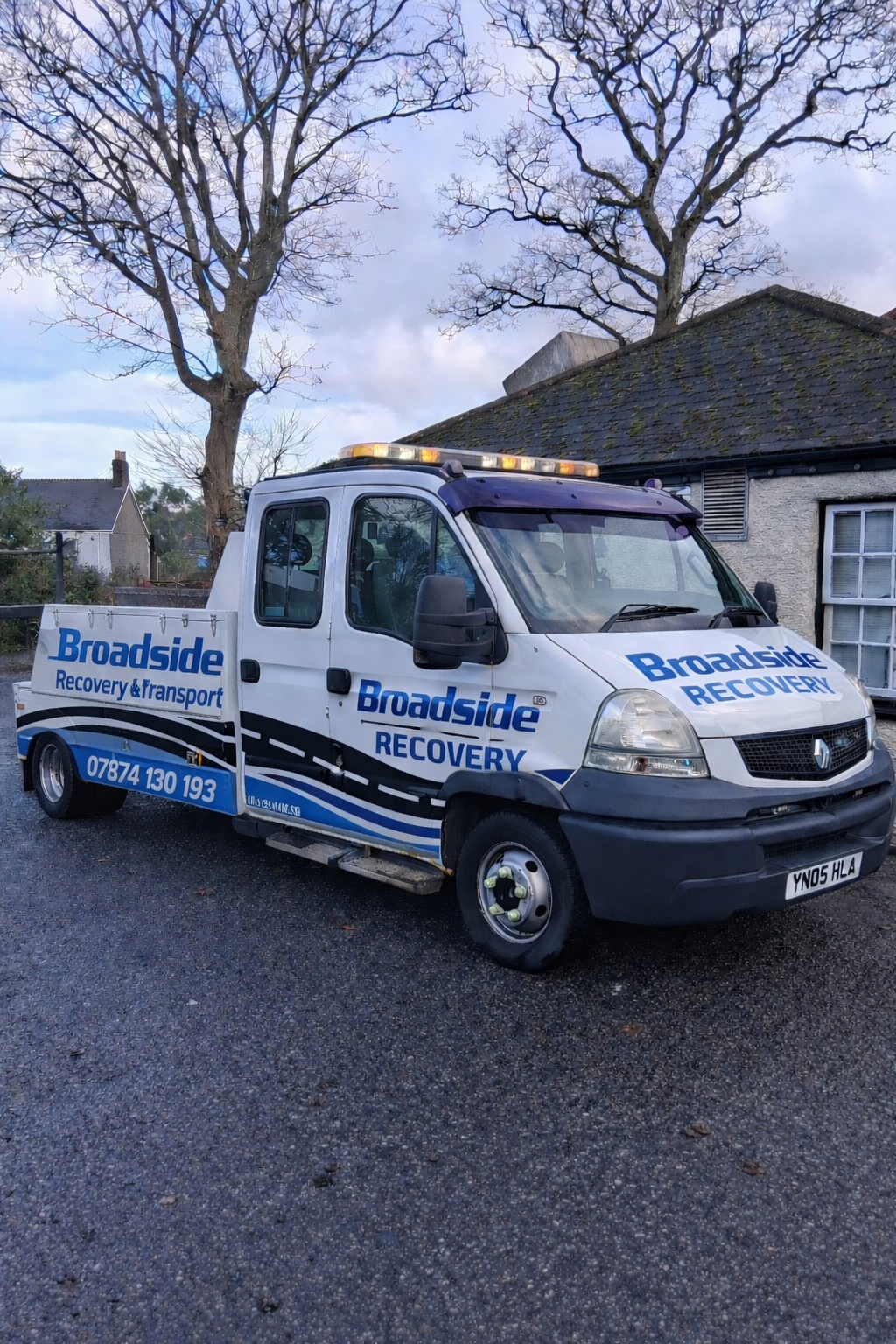
For a short, slow move on a quiet road, a car with working brakes and steering can sometimes be towed by another car using a rope or a rigid tow bar. For anything else — automatics, four-wheel-drive vehicles, electric cars, anything with brake or steering problems, busy roads or steep hills — a flatbed is the safer choice, because the broken-down vehicle travels with all four wheels off the ground and nothing rotates.
The question most people are really asking is 'can I avoid paying for a tow truck?'. Sometimes, yes. But the cost of a damaged gearbox, a clipped kerb or a rear-end shunt on a Cornish hill quickly outweighs a recovery fee.
Rope towing: what it asks of both drivers
With a flexible rope or strap, the towed car relies entirely on its own brakes to stop. The person in the driver's seat must keep the rope taut, brake in step with the car in front and steer without power assistance, which feels much heavier than normal. Both drivers need to agree signals beforehand. The towed car should display an 'ON TOW' sign, and the rope must be clearly visible to other road users.
On narrow lanes with sharp bends, it is easy for the rope to snag a verge or the towed car to cut a corner. On downhill stretches the towed car can catch up with the one in front. Neither is a comfortable situation.
Rigid tow bars: better, but not a cure-all
A rigid bar keeps the two cars at a fixed distance, so the towing car does more of the braking. It is steadier than a rope, but the towed car's wheels still turn on the road, and that is the real limitation.
Vehicles that should not be towed on their wheels
Check the handbook before towing anything. As a general rule, the following should be moved on a flatbed:
- Many automatic cars — the gearbox can be damaged when driven wheels turn without the engine running.
- Four-wheel-drive and all-wheel-drive vehicles, where every wheel is connected to the drivetrain.
- Electric and hybrid vehicles — EVs must not be towed with driven wheels on the ground.
- Anything with brake, steering or suspension faults, or accident damage.
- Cars that will not roll at all, which need skates, dollies or a winch.
Where to attach a tow
Use the vehicle's designated towing eye or recovery point, not a bumper, suspension arm or random bracket. Many modern cars have a screw-in towing eye stored with the spare wheel or tool kit. Our towing eyes guide explains how to find it.
Why a flatbed avoids the risk
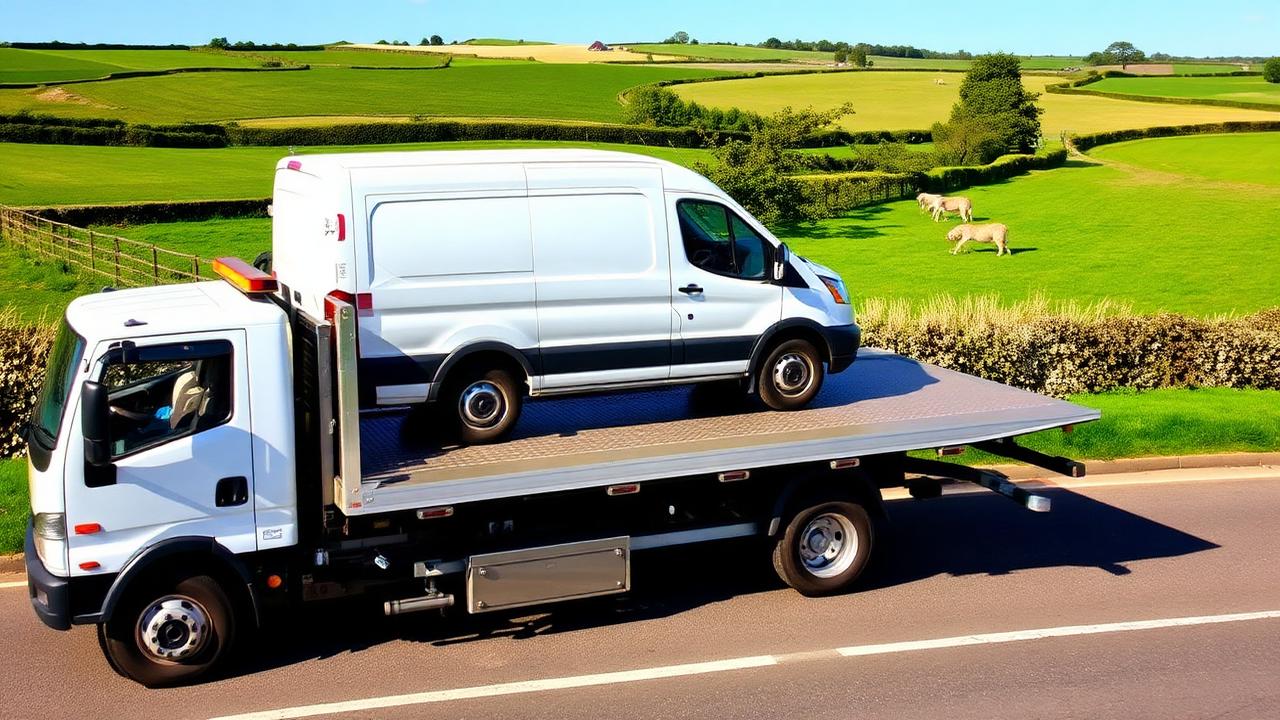
On a flatbed the vehicle is winched or driven onto the bed and secured with all four wheels off the ground. Nothing turns, so gearbox type, driveline and brakes do not matter. There is no second driver to put at risk and no concertina effect on hills. It is the method used for every vehicle we recover, from small cars to vehicles of up to 7.5 tonnes.
A quick decision checklist
Tow it yourself only if all of these are true: the car is a manual two-wheel-drive that the handbook allows to be towed; brakes and steering work; the distance is short; the route is quiet and fairly level; and both drivers are confident. If any one is not true, ring Broadside Recovery on 07874 130193. We operate 24/7 and agree the price on the phone before we set off.
Need this sorted today?
Not sure the car is safe to tow? A flatbed takes the risk out of it — call for a price before anyone gets the rope out.
Frequently asked questions
Can I tow an automatic car with a rope?
Often not safely. Many automatics can be damaged if driven wheels turn without the engine running. Check the handbook, and if in doubt use a flatbed.
Can you tow an electric car if it breaks down?
Not with its driven wheels on the ground. EVs are moved by flatbed, with all four wheels off the road.
Is a tow bar safer than a rope?
It is steadier, because it keeps a fixed distance, but the towed car's wheels still turn, so the same vehicle restrictions apply.
What if the car doesn't roll?
It cannot be rope-towed. It needs skates, dollies or a winch onto a flatbed.
Services covered in this guide
Related guides
Towing an Automatic Car
Many automatics should not be towed with their driven wheels on the road. Loading onto a flatbed avoids the problem entirely.
ReadTowing Eyes & Recovery Points
Two minutes of checking before the truck arrives can prevent a bent subframe or a torn bumper.
ReadFlatbed vs Tow Truck
Why the wrong lift can damage a gearbox or bumper, and how to tell which method your vehicle actually needs before the truck arrives.
ReadTowing Rules and Licences
A plain-English rundown of licence categories, weight limits and trailer safety basics, and when it makes more sense to book a professional transporter instead.
ReadWhen a Car Won't Roll: Skates, Dollies and Winching
Some vehicles cannot simply be pushed onto a truck. Here is how immovable cars are recovered without damage, and why the details you give on the phone matter.
Read